
Years of desk work leave a particular mark on the body after 55. The hips tighten at the front, the glutes switch off, the upper back rounds, and the head drifts forward. Each of those changes feeds the next, and together they make standing tall feel like effort.
I’ve been a personal trainer for close to 40 years, and for the last 25 years I’ve been running TRAINFITNESS, the UK’s leading fitness education provider. What most people don’t realise is that these changes are reversible with the right targeted movements. Here are the five exercises I use with clients to undo the damage of sitting.
RELATED: 5 Morning Exercises That Restore Knee Strength Faster Than Squats After 60
What Sitting Does to the Body
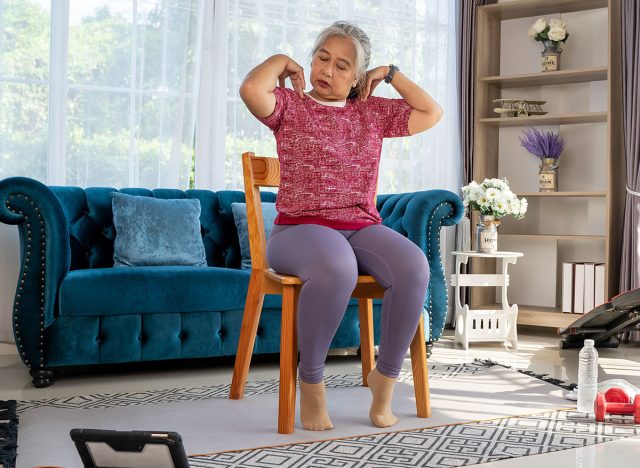
Lower back ache is probably the most common complaint I hear. It usually comes from hip flexors that have been shortened by hours in a chair, which tilts the pelvis forward and puts the lower back under constant strain.
Next come tight hamstrings, along with a rounded upper back and shoulders that slump forward. The neck then compensates by poking the head forward to keep the eyes level. By 55, these patterns have often been building for decades, and they show up as stiffness, reduced mobility, and a posture that takes effort to hold.
Why This Beats Yoga

Yoga is a genuinely good practice, and I would never discourage anyone from it. The real difference is one of targeting. These five moves are correctives built around the exact faults that sitting creates: short hip flexors, switched-off glutes, a rounded upper back, and a forward-poking head.
A general yoga class is broader and less aimed at those specific faults. It will help you feel better overall, but it may not directly reverse the particular patterns that a desk job builds. These exercises aim to address the problem directly.
RELATED: 5 Standing Exercises That Banish Bat Wings in 30 Days After 50
Hip Flexor Stretch
Sitting keeps the hip flexors shortened for hours, which tilts the pelvis and aches the lower back. Lengthening them lets you stand tall again.
How to Do It:
- Stand with a hand on a chair or worktop
- Step one foot well back, keep it fairly straight
- Gently tuck the tailbone under until a stretch is felt at the front of the back hip
- Hold 20 to 30 seconds, then swap sides
Avoid These Mistakes:
- Don’t arch your lower back instead of tucking the pelvis under. It hides the stretch and pinches the back.
Form Tip: Tuck the tailbone under until you feel the stretch at the front of the back hip, not in the lower back.
Glute Bridge
Hours of sitting switch the glutes off, so the lower back takes over work it was never meant to do. Bridges wake the glutes and rebuild the back of the body.
How to Do It:
- Lie on your back, knees bent, feet flat and hip-width apart
- Push through the heels and lift the hips until the body makes a straight line from knees to shoulders
- Squeeze the bottom at the top
- Lower slowly
Avoid These Mistakes:
- Don’t arch your lower back and push from it instead of squeezing the glutes. The lift should come from the bottom, not the spine.
Sets and Reps: 10 to 12 reps.
RELATED: 5 Daily Exercises That Trim Waist Overhang Faster Than Gym Workouts After 50
Wall Angels
This move reverses the rounded upper back and forward shoulders that sitting builds, by opening the chest and working the muscles between the shoulder blades.
How to Do It:
- Stand with your back against a wall, feet a little forward, lower back gently flattened
- Raise the arms into a goalpost shape with the backs of the hands towards the wall
- Slide them up and down while keeping hands and arms as close to the wall as you can
Avoid These Mistakes:
- Don’t let your lower back arch away from the wall or force your arms flat when your shoulders aren’t ready. Only go as far as contact can be kept.
Sets and Reps: 8 to 10 slow slides.
Chin Tuck
Years of looking down at desks and phones push the head forward, which strains the neck. Chin tucks bring the head back over the shoulders and strengthen the deep neck muscles.
How to Do It:
- Sit or stand tall
- Without tipping the head, glide it straight back to make a gentle double chin
- Hold for 3 to 5 seconds, then release
Avoid These Mistakes:
- Don’t nod your chin down towards your chest instead of gliding it straight back. Keep the eyes level throughout.
Sets and Reps: 8 to 10 reps.
RELATED: If You Can Do This Many Pushups After 60, Your Arm Strength Is Stronger Than 90% of Peers
Standing Hip Hinge
Sitting shortens the hamstrings and erases the hinge pattern, so people bend from the back instead of the hips. Relearning the hinge protects the lower back and frees the hips and hamstrings.
How to Do It:
- Stand tall, feet hip-width, knees soft
- Push the hips backwards while keeping the back flat and the chest open
- Lower the torso until a stretch is felt in the hamstrings
- Squeeze the glutes to stand tall again
Avoid These Mistakes:
- Don’t round your back, or bend your knees into a squat instead of sending the hips back. The movement comes from the hips, with the back staying long.
Sets and Reps: 8 to 10 reps.
How Often to Do This
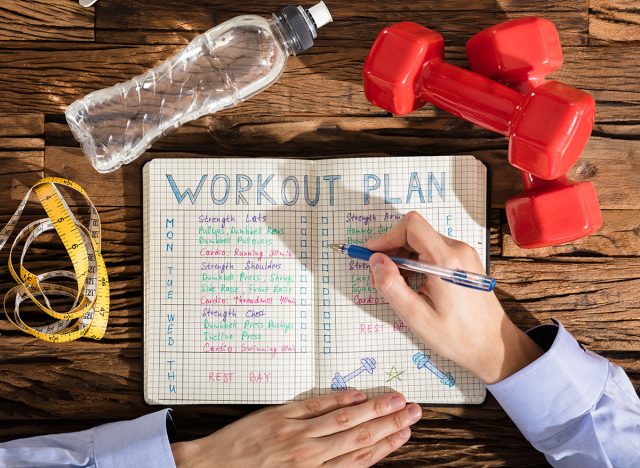
These exercises are gentle enough for daily use. I’d suggest doing them most days, and ideally breaking them up through a sitting day rather than saving them for one session. Two or three in the morning, a couple at lunch, the rest in the evening.
Standing and moving every 30 to 45 minutes matters just as much as the exercises themselves. A short walk, a stretch at the desk, anything that breaks the sitting pattern. The exercises undo the damage, but the movement breaks stop it from building in the first place.
RELATED: The 5-Minute Balance Routine That Cuts Fall Risk After 70
What to Expect

In the first week or two, most people notice less stiffness and an easier upright posture. A lot of that early change is the nervous system releasing tension rather than new muscle. By four to six weeks, the glutes and mid-back get genuinely stronger, and posture holds with less effort.
Undoing years of sitting is an ongoing process, so the habit matters more than any single session. Keep at it, and the gains keep compounding.
The post 5 Exercises That Undo 10 Years of Sitting Faster Than Yoga After 55 appeared first on Eat This Not That.


