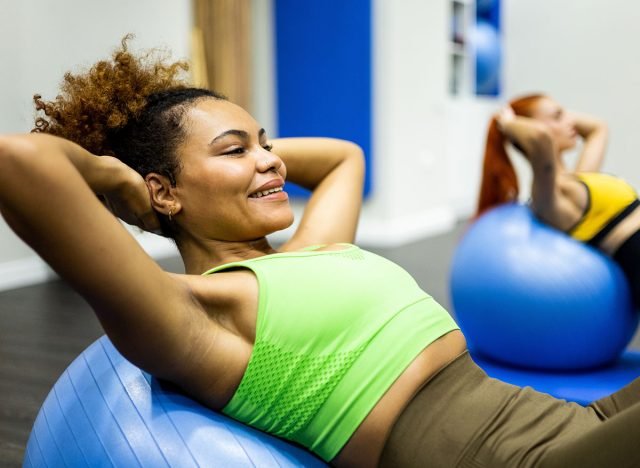
A solid, strong core is easy to appreciate the moment you need it. It helps you sit up with control, stay steady when your weight shifts, and move with more confidence during the day. After 60, that strength becomes less about chasing six-pack abs and more about keeping your body supported when life asks you to move, reach, carry, or get off the floor.
Your core gets stronger when you learn how to hold positions under tension. That means your abs can brace, your hips can stay level, and your spine can feel supported while your arms or legs move. Core training should help you control your body, not leave you guessing whether a bunch of crunches is doing the job.
That’s where testing helps. A good core test gives you feedback you can actually use. Can you hold position on one side? Can you stay steady when the opposite arm and leg move away from each other? Can you keep your trunk still while your hand leaves the floor? Test it, train it, then come back later and see what changed.
The three holds below check your core from different angles without needing a long workout or complicated equipment. If you can complete all three standards after 60, your abs and trunk control are in a standout place. You’ll learn how each hold works, what counts as a clean rep, and how to modify or progress each one based on where you are right now.
The 3-Hold Core Challenge After 60

Complete these holds with clean form and controlled breathing. Rest as needed between exercises. This isn’t a race, and it shouldn’t feel sloppy. Your goal is to own each position before moving to the next one.
Core Challenge Standards:
- Side Plank: Hold for 30 seconds per side.
- Bird-Dog: Hold for 20 seconds per side.
- Incline Plank with Shoulder Taps: Complete 20 controlled taps total.
If one hold feels much harder than the others, that’s helpful information. It gives you a clear focus for training instead of guessing which part of your core needs more attention.
RELATED: 4 Wall Exercises Every Person Over 60 Should Use Weekly to Restore Abs
Side Plank
Side planks target the muscles that keep your torso from folding or tipping to one side. That’s a big reason they belong in this challenge. Your abs have to brace, your hips have to stay lifted, and your shoulder has to support the position long enough for the hold to mean something.
Muscles Trained: Obliques, deep core muscles, glutes, shoulders.
How to Do It:
- Lie on one side with your forearm on the floor and your elbow under your shoulder.
- Stack your feet or place your top foot slightly in front for more support.
- Brace your core before lifting your hips.
- Raise your body until you form a straight line from head to feet.
- Hold the position while breathing steadily.
- Lower with control, then repeat on the other side.
Challenge Standard: Hold for 30 seconds per side without letting your hips drop or your shoulder roll forward.
Make It Easier: Bend your knees and hold from the knees, or place your forearm on a bench.
Make It Harder: Hold longer, raise your top leg, or move into a full side plank from the feet.
Form Tip: Press your forearm into the floor and keep your ribs stacked over your hips.
Bird-Dog
This one looks simple until you slow it down. The bird-dog asks your core to keep your trunk steady while your opposite arm and leg reach away from each other. If your hips twist or your low back arches, the hold tells you exactly where control starts to fade.
Muscles Trained: Abs, spinal stabilizers, glutes, upper back.
How to Do It:
- Start on your hands and knees with your hands under your shoulders.
- Set your knees under your hips.
- Brace your midsection before you move.
- Reach one arm forward and the opposite leg straight back.
- Hold the position without shifting your hips.
- Return to the starting position with control.
- Repeat on the other side.
Challenge Standard: Hold for 20 seconds per side while keeping your spine neutral and your hips level.
Make It Easier: Reach only one arm or one leg at a time.
Make It Harder: Hold longer, move slower between sides, or use a light ankle weight.
Form Tip: Reach long through your hand and heel without arching your lower back.
RELATED: 5 Home Exercises That Restore Walking Speed Faster Than Treadmills After 65
Incline Plank with Shoulder Taps
For the final hold, use the incline on purpose. Elevating your hands makes the plank easier to control while the shoulder taps challenge your abs to stay firm. Each tap removes one hand from the surface, so your core has to keep your body from rocking side to side.
Muscles Trained: Abs, obliques, shoulders, triceps.
How to Do It:
- Place your hands on a sturdy bench, counter, or box.
- Step your feet back until your body forms a straight line.
- Brace your core and squeeze your glutes.
- Lift one hand and tap the opposite shoulder.
- Lower your hand before switching sides.
- Keep alternating until you finish the set.
Challenge Standard: Complete 20 controlled taps total without letting your hips sway or your body sag.
Make It Easier: Use a higher surface, such as a countertop or wall.
Make It Harder: Use a lower surface, slow down each tap, or perform the movement from the floor.
Form Tip: Widen your feet slightly if you need more control, then bring them closer as you get stronger.
RELATED: 4 Daily Exercises That Restore Muscle Tone Faster Than Weight Training After 65
What It Means If You Complete All 3 Holds

Finishing this challenge after 60 seconds says your core can do more than tighten for a second or two. It can hold position, adjust under pressure, and keep working when your arms or legs change the demand. That’s useful strength.
The side plank checks side-to-side control. The bird-dog shows how well your trunk stays steady when your limbs move. The incline plank with shoulder taps adds a little movement on top of the brace. Put them together, and you get a better picture of core strength than you’d get from one exercise alone.
Completing all three standards puts your abs in a strong place for this age range. It also gives you a simple benchmark to come back to. Retest every few weeks and look for cleaner holds, steadier breathing, and better side-to-side control.
RELATED: 4 Exercises That Undo a Decade of Desk Work Faster Than Yoga After 60
How to Build Up to the Full Core Challenge
Start with the version you can control. That might mean a side plank from your knees, a bird-dog with only the leg moving, or shoulder taps with your hands on a high counter. Those versions still count as productive training when they help you build better position.
- Train two to three times per week: Use short holds and leave enough energy to keep the last rep sharp.
- Add time slowly: Build each hold by five to 10 seconds when your current version feels steady.
- Keep breathing: Holding your breath makes the exercise feel harder and can make your form tighten too fast.
- Work both sides evenly: Spend a little more time on the side that feels less stable.
- Progress the surface before the speed: For shoulder taps, lower the incline before you try to move faster.
- Retest on the same setup: Use the same surface, hold times, and standards so you can easily see your progress.
Strong abs after 60 should help you move better, hold better positions, and trust your body more. If you can complete these three core holds with clean form, you’ve built strength many people half your age would struggle to match.
References
- Zhong, Yuanji et al. “Effects of core training on balance performance in older adults: a systematic review and meta-analysis.” Frontiers in public health vol. 13 1661460. 9 Oct. 2025, doi:10.3389/fpubh.2025.1661460
- Kang, Kwon-Young. “Effects of core muscle stability training on the weight distribution and stability of the elderly.” Journal of physical therapy science vol. 27,10 (2015): 3163-5. doi:10.1589/jpts.27.3163
The post If You Can Complete These 3 Core Holds After 60, Your Abs Are Stronger Than People Half Your Age appeared first on Eat This Not That.


