
Bone loss speeds up after 65, and it’s rarely the thinning itself that changes a life. It’s the fracture that follows. A broken hip or a broken wrist can take away independence in a single afternoon.
After almost 40 years as a personal trainer, and 25 years running TRAINFITNESS, the UK’s leading fitness education company, I’ve trained people in their sixties, seventies and eighties, and the story I hear is usually the same.
The exercise that protects bone doesn’t have to be high-impact. Bone responds to load at any age, and you can load it hard without jarring the joints. These five exercises can help you do exactly that, with nothing more than a chair, a band and a couple of water bottles.
RELATED: 4 Morning Exercises That Restore Shoulder Strength Faster Than Lifting Weights After 60
Why Bone Loss Catches People Out

The first problem is that bone loss is silent. Nobody feels their bones thinning, so the first thing many of my clients hear about it is a fracture, a wrist broken catching a fall, or a scan result that follows a routine check.
The second problem is what people stop doing. Retirement often swaps a working life for swimming, cycling and walking, all good for the heart, but none of them loads the skeleton enough to hold onto bone. And once someone’s told their bones are thinning, they tend to move even less, which speeds the loss up rather than slowing it.
The third problem is where the loss lands. The hips, wrists and spine thin fastest, and they’re the ones that fracture. A slip in the bathroom, a stumble on a curb, a fall onto an outstretched hand, those are the moments that break bones after 65.
The fourth problem is what bone loss brings with it. Muscle thins alongside bone, grip weakens and balance gets shakier, so the falls that break bones become more likely. Fear does the rest: people move less to stay safe, the cycle feeds itself, and by the time someone reaches me they often feel fragile.
Why Low-Impact Beats Running

Bone is living tissue that rebuilds itself in response to load and strain. Load it and it gets denser. Leave it unloaded and it thins, and the thinning speeds up with age. So the question becomes how to load bone hard without punishing the joints.
Running does load bone, and it helps. The repeated impact through the legs gives the hips and thighs a useful training signal, and I’d never tell a healthy runner in their late sixties to stop because of their age. The trouble is where that load lands, and where it doesn’t. Running does little for the spine, the arms or the wrists, and those are three of the most common fracture sites in people over 65.
The other issue is the joints. The same repeated impact that loads bone in running can aggravate knees and hips that have already done decades of work. Plenty of people over 65 can’t run without pain, so they stop, and the bone loading stops with them.
Resistance work covers everything running misses, and it treats the joints gently. Pushing, pulling and lifting against a weight or a band loads bone across the whole body, including the spine, shoulders and wrists. You also control the load precisely, so you can start light and build at your own pace. For most people over 65, that makes it a more complete and safer way to build bone than running, without pretending running is useless.
RELATED: 4 Kitchen-Counter Exercises That Strengthen Your Core Faster Than Pilates After 65
Before You Start

If you’ve been diagnosed with osteoporosis, talk to your doctor before beginning anything new, avoid loaded forward-bending of the spine, and keep the starting weights light. Stay on any supplements you’ve been prescribed, and pair the training with enough calcium and vitamin D, because bone can’t rebuild without the raw materials.
Here are the five exercises I use most often with clients over 65, in the order I usually introduce them. You’ll need a sturdy chair, a resistance band, something solid to hold onto and a light weight or two, and filled water bottles do the job there. None of them involve jumping, and together they load bone from the wrists down to the hips.
Chair Squats
Sitting down and standing back up under control loads the hips, thighs and lower spine with your own bodyweight, and that strain is the signal that tells those bones to stay dense. There’s no impact anywhere in it, just load.
How to Do It:
- Sit tall toward the front of a sturdy chair, feet flat on the floor and hip-width apart.
- Stand all the way up, until your hips and knees are straight.
- Lower slowly back down under control, only just touching the seat before standing again.
Avoid These Mistakes:
- Don’t drop down fast and bounce off the seat. Lower yourself slowly, because the controlled lowering is where much of the bone loading happens.
Sets and Reps: 10 to 12.
Form Tip: Only just touch the seat before you stand again.
RELATED: 4 Wall Exercises That Build a 6-Pack Faster Than Sit-Ups After 65
Resistance Band Row
Pulling against a band loads the upper back, shoulders and arms, and it’s the muscles tugging on those bones that builds them. This is bone work running can’t give you, because it trains the upper body.
How to Do It:
- Loop a resistance band around a door handle, or something solid, at chest height.
- Hold an end in each hand and step back until there’s tension in the band.
- Pull your elbows back past your ribs, squeezing your shoulder blades together.
- Return slowly to the start under control.
Avoid These Mistakes:
- Don’t pull with the arms only or lean back for momentum. Stay tall and pull with the upper back, so the load goes where you want it.
Sets and Reps: 12 to 15.
Form Tip: Squeeze your shoulder blades together as your elbows pass your ribs.
Overhead Press
Pressing a weight overhead loads the shoulders, arms and the whole length of the spine, which has to hold you upright under the load. The wrists and arms are common fracture sites, and this puts load straight through them.
How to Do It:
- Stand or sit tall, holding a light dumbbell or a filled water bottle in each hand at shoulder height.
- Press both hands overhead until your arms are nearly straight.
- Lower under control back to shoulder height.
Avoid These Mistakes:
- Don’t arch your lower back to push the weight up. Brace the trunk and keep the ribs down, so the shoulders and arms do the work.
Sets and Reps: 8 to 12.
Form Tip: Start lighter than you think you need.
RELATED: 4 Couch Exercises That Trim Waist Overhang Faster Than Crunches After 60
Supported Split Squat
Working one leg at a time puts more load through that hip and thigh than a two-legged move does, so the hip, the most serious fracture site of all, gets a stronger signal. There’s no impact, just controlled load.
How to Do It:
- Stand with one hand on a kitchen counter and one foot a stride in front of the other.
- Bend both knees to lower the back knee toward the floor, keeping the front knee over the ankle.
- Push back up through the front leg.
Avoid These Mistakes:
- Don’t lean forward or let the front knee drift past the toes. Stay upright and sink straight down.
Sets and Reps: 8 to 10 on each leg.
Form Tip: Keep the front knee over the ankle as you lower.
Band Hip Abduction
Pushing the leg out against a band loads the side of the hip through the muscles that attach there, which strengthens the hip bone and steadies you on your feet at the same time.
How to Do It:
- Tie a resistance band in a loop around both legs, just above the ankles.
- Stand tall, holding a kitchen counter for balance.
- Push one leg out to the side against the band.
- Bring it back under control, then repeat with the other leg.
Avoid These Mistakes:
- Don’t lean your body over to get the leg higher. Stand tall and move only the leg, so the hip does the work.
Sets and Reps: 12 to 15 on each leg.
Form Tip: Move only the leg and keep your body still.
RELATED: 5 Chair Exercises That Improve Balance Faster Than Yoga After 70
How Often to Do This
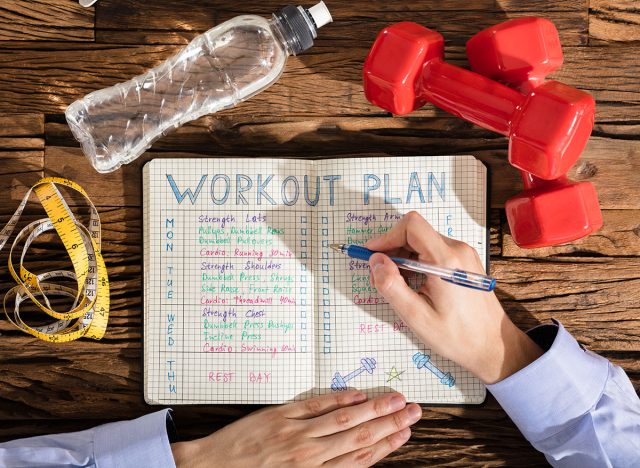
The short answer is two or three days a week, with a rest day between sessions. Bone and muscle rebuild between workouts, not during them, so doing these every day works against you. Something like Monday, Thursday and Saturday gives each session a full day of recovery either side.
Start with one set of each exercise, or two if the first felt comfortable, and keep the load light for the first couple of weeks. Then build gradually: a little more weight, a stronger band, or two extra repetitions. It’s the slow increase in load that keeps telling bone to strengthen, and it’s also what keeps the joints happy.
The whole session takes about 20 minutes, all five exercises with a short break between each, so it fits into a morning without taking over the day. On the days in between, do whatever you enjoy: a walk, a swim, time in the garden. Those keep the heart and the joints moving, and the bone work is already done.
What to Expect

Strength and balance move first. Within three to six weeks, most people I work with notice they’re steadier on their feet, and getting out of a chair or climbing stairs takes less effort. Daily function is where the early results show: carrying groceries, lifting a pan, standing up without pushing on the arms.
Bone density is slower, and you should expect it to be. Real change in the bone itself takes 6 to 12 months of consistent training, and often longer, so a scan won’t jump after a few weeks and it isn’t supposed to. What you’re working toward is slowing or halting the loss and cutting your fracture risk.
If a scan a year on shows the bone has held steady rather than thinned further, the program has done what it should. In the meantime, the strength and balance gains arrive far sooner, usually within the first two months, and they’re what protect you day to day, because steadier legs and a stronger grip mean fewer falls and gentler ones.
The post 5 Low-Impact Exercises That Strengthen Bones Better Than Running After 65 appeared first on Eat This Not That.


