
Aging well has less to do with chasing the hardest workout and more to do with keeping the body capable. You want strength you can use, joints that move well, and enough balance to trust your steps. The best exercises after 60 usually train those qualities at the same time.
That’s why I like movements that ask you to control your body first. Split squat holds build lower-body strength and balance. Plank shoulder taps train your midsection while your hands and shoulders support you. Squats, bridges, and deadlifts help you maintain the strength you need to stand, lift, and move with confidence.
These exercises also fit almost any home setup. You can perform them with bodyweight, a dumbbell, a kettlebell, a backpack, or a sturdy chair for support. Start with the version that feels clean, then add load or range once your reps feel steady.
This routine gives you a practical daily plan for healthy aging. You’ll work through controlled holds, steady core work, squatting strength, single-leg hip work, and a simple deadlift pattern to keep the whole body strong.
Split Squat Hold
Holding the bottom of a split squat builds strength where balance often gets tested. Your front leg supports you, your hips stay level, and your core keeps your torso tall. Use a chair, wall, or counter at first if you want more support. A steady 10-second hold with good position beats a deeper hold that feels shaky.
Muscles Trained: Quads, glutes, hamstrings, calves, core.
How to Do It
- Stand tall with your feet staggered.
- Step one foot forward and one foot back.
- Hold a chair or wall lightly for support.
- Bend both knees and lower into a comfortable split squat.
- Hold the position while keeping your front foot planted.
- Stand back up and switch sides.
Recommended Sets and Reps: Perform 2 to 3 holds of 10 to 20 seconds per side.
Best Variations: Supported split squat hold, shorter-range split squat hold, dumbbell split squat hold.
Form Tip: Keep most of your pressure through the middle of your front foot.
RELATED: The 12-Minute Morning Routine That Builds More Strength Than Lifting Weights After 65
Incline Plank With Shoulder Taps
Shoulder taps turn an incline plank into a controlled balance drill for your upper body and core. Each tap shifts your weight slightly, so your abs have to keep your hips from rocking side to side. Place your hands on a counter, couch, bench, or sturdy chair to make the angle fit your strength. Move slowly and place each hand back down before switching sides.
Muscles Trained: Abs, shoulders, chest, glutes, upper back.
How to Do It
- Place your hands on a sturdy elevated surface.
- Step your feet back until your body forms a straight line.
- Brace your abs and lightly squeeze your glutes.
- Lift your right hand and tap your left shoulder.
- Place your right hand back down with control.
- Switch sides and continue alternating.
Recommended Sets and Reps: Perform 2 to 3 sets of 8 to 12 taps per side.
Best Variations: Higher-hand incline plank tap, slower shoulder tap, regular incline plank hold.
Form Tip: Squeeze your glutes and abs together to prevent excessive hip movement.
Goblet Hold Box Squat
The box gives you a target, and the goblet hold challenges your posture. This combination trains the strength you use every time you sit down and stand back up. Hold a dumbbell, kettlebell, or loaded backpack at your chest, then lower until you lightly touch the box or chair. Stand tall with control and keep the weight close.
Muscles Trained: Quads, glutes, hamstrings, core, upper back.
How to Do It
- Stand in front of a sturdy box, bench, or chair.
- Hold a dumbbell, kettlebell, or loaded backpack at your chest.
- Set your feet about shoulder-width apart.
- Push your hips back and bend your knees.
- Lightly touch the box or chair.
- Press through your feet to stand tall.
Recommended Sets and Reps: Perform 2 to 3 sets of 8 to 12 reps.
Best Variations: Bodyweight box squat, higher box squat, slow-tempo goblet box squat.
Form Tip: Touch the box lightly instead of sitting down fully between reps.
RELATED: 4 Wall Exercises That Flatten Lower Belly Faster Than Sit-Ups After 65
Single-Leg Glute Bridge
Single-leg bridges show you how well each hip can work on its own. One foot stays planted while the other leg lifts, so the working glute drives the rep. This helps build the hip strength you need for walking, stairs, and getting up from lower positions. Keep the range small at first and stop before the lower back starts doing the work.
Muscles Trained: Glutes, hamstrings, core, hips.
How to Do It
- Lie on your back with your knees bent.
- Place your feet flat on the floor about hip-width apart.
- Lift your right foot slightly off the floor.
- Press through your left heel.
- Lift your hips until your left glute tightens.
- Lower with control and complete your reps before switching sides.
Recommended Sets and Reps: Perform 2 to 3 sets of 6 to 10 reps per side.
Best Variations: Glute bridge, assisted single-leg glute bridge, paused single-leg glute bridge.
Form Tip: Squeeze your core tight and push your foot through the floor..
Kettlebell Deadlift
Picking weight up well is one of the most useful strength skills you can keep. The kettlebell deadlift trains your hips, legs, back, and grip with a movement that carries over to daily lifting. Place the kettlebell between your feet, push your hips back, and stand tall by driving through the floor. Use a dumbbell, loaded bag, or backpack if that fits your setup better.
Muscles Trained: Glutes, hamstrings, quads, back, core, grip.
How to Do It
- Stand with a kettlebell between your feet.
- Set your feet about hip-width apart.
- Push your hips back and bend your knees slightly.
- Grip the kettlebell handle with both hands.
- Press through your feet and stand tall.
- Lower the kettlebell back to the floor with control.
Recommended Sets and Reps: Perform 2 to 3 sets of 8 to 10 reps.
Best Variations: Dumbbell deadlift, elevated kettlebell deadlift, backpack deadlift.
Form Tip: Keep the weight close to your body as you stand and lower.
RELATED: If You Can Hold These 3 Yoga Poses After 55, Your Balance Is Better Than Most
How to Keep These Exercises Working for You
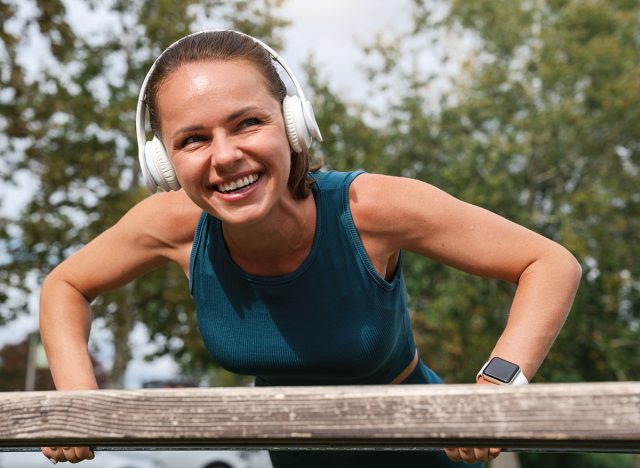
Daily strength work should help you feel capable, not beat up. Use these exercises three to five days per week, and keep the first few sessions focused on control. Once the movements feel steady, add a little weight, extend the holds, or slow the lowering phase to make the same exercises more challenging.
- Start with bodyweight when needed: Clean reps give you a better base before adding load.
- Use household support: A chair, couch, counter, or wall can help you train balance while keeping the movement smooth.
- Pick one loaded option: A dumbbell, kettlebell, backpack, or water jug can all work when the weight feels manageable.
- Keep holds steady: Split squat holds and plank taps build more strength when your body stays quiet.
- Move through a comfortable range: Strong, controlled reps beat chasing extra depth before your body is ready.
- Build gradually: Add load, reps, or time once the current version feels confident.
References
- Brogno, Brian. “Aging With Strength: Functional Training to Support Independence and Quality of Life.” Inquiry : a journal of medical care organization, provision and financing vol. 62 (2025): 469580251348133. doi:10.1177/00469580251348133
- Roberts, Christian K et al. “Effects of Home-Based Exercise Training Systems, Combined with Diet, on Cardiometabolic Health.” International journal of exercise science vol. 12,2 871-885. 1 May. 2019, doi:10.70252/WEFP3647
The post 5 Daily Exercises That Reverse Aging Better Than Gym Workouts After 60 appeared first on Eat This Not That.


