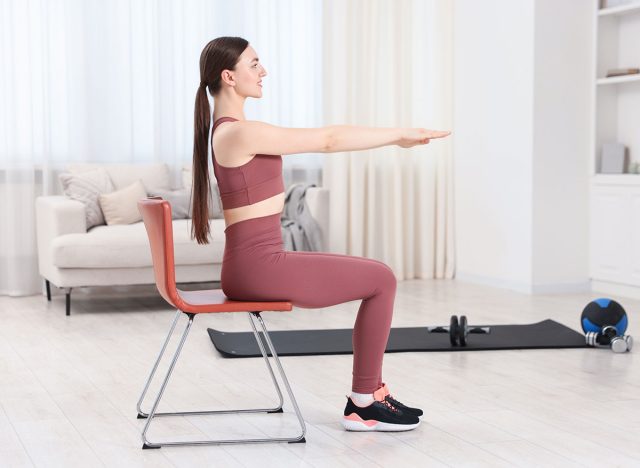
Walking is often described as the most accessible form of exercise and an excellent way to boost your health. This makes one believe that walking should feel comfortable and something you can lean on every day, whether you’re heading out for a quick loop or just moving through your normal routine. But a lot of that comes down to how your lower body and core work together with each step. Your legs handle the push into the ground and the ability to move forward, while your core keeps you steady and helps transfer that force smoothly from one side to the other. When that connection is there, your stride feels more balanced, your posture stays upright, and your pace settles into something that feels natural and repeatable.
Over the years, I’ve worked with a wide range of clients who wanted to improve their movement without jumping into anything overly demanding. One thing that always holds true is that building strength in a supported position helps everything click faster. When you’ve got a chair there to guide your setup, you can focus on clean reps, better positioning, and actually feeling the right muscles working. That carries over quickly once you’re back on your feet.
These chair-based exercises give you a simple way to build the kind of strength that supports better walking, without overthinking the process. They fit easily into your routine and work especially well as a quick warm-up before you head out the door. A few focused minutes here can change how your entire walk feels, and that’s where this really starts to pay off.
RELATED: 5 Standing Exercises That Restore Hip Strength Faster Than Floor Stretches After 55
Sit-to-Stand
This one directly carries over to walking. Every step you take starts with your ability to produce force through your legs, and sit-to-stands train that pattern in a simple, controlled way. You’re building strength through your hips and thighs while also reinforcing balance and coordination. It also teaches you how to control your body as you lower down, which plays a big role in joint stability. When this movement feels strong, walking tends to feel more natural and less effortful.
Muscles Trained: Quadriceps, glutes, hamstrings, and core
How to Do It:
- Sit tall in a chair with your feet flat on the floor.
- Engage your core and lean slightly forward.
- Press through your feet and stand up.
- Fully extend your hips at the top.
- Lower yourself back down with control.
- Repeat for your reps.
Recommended Sets and Reps: Perform 3 sets of 8 to 12 reps. Rest for 45 to 60 seconds between each set
Best Variations: Box squats, tempo sit-to-stands, assisted sit-to-stands
Form Tip: Drive through your heels to activate your glutes.
Seated Marches
Seated marches help build the coordination and hip strength needed for a smooth walking stride. Each time you lift your leg, your core has to stabilize while your hip flexors and supporting muscles do their job. That combination carries over directly to walking mechanics. It also gives you a safe way to work on balance without needing to stand the entire time. Over time, you’ll notice your steps feel more controlled and rhythmic.
Muscles Trained: Hip flexors, lower abdominals, quadriceps, and stabilizing core muscles
How to Do It:
- Sit tall in a chair with your feet flat on the ground.
- Engage your core and keep your chest upright.
- Lift your right knee toward your chest.
- Lower it back down with control.
- Alternate to the left side.
- Continue alternating for your reps.
Recommended Sets and Reps: Perform 3 sets of 10 to 15 reps per side. Rest for 30 to 45 seconds between each set
Best Variations: Slow marches, alternating holds, band-resisted marches
Form Tip: Keep your torso steady while your legs move.
RELATED: If You Can Hold a Dead Hang This Long After 60, Your Upper-Body Strength Is Top-Tier
Seated Leg Extensions
Strong quads help you maintain a steady stride and support your knees with each step. Seated leg extensions let you focus directly on building that strength in a controlled way. You’re also improving your ability to fully extend your leg, which plays a role in stride length and efficiency. This movement is simple, but it adds up quickly when done consistently.
Muscles Trained: Quadriceps, hip flexors, and stabilizing core muscles
How to Do It:
- Sit tall in a chair with your feet flat.
- Engage your core and straighten your right leg.
- Lift until your leg is fully extended.
- Pause briefly at the top.
- Lower back down with control.
- Alternate sides and repeat.
Recommended Sets and Reps: Perform 3 sets of 10 to 15 reps per side. Rest for 30 to 45 seconds between each set
Best Variations: Slow tempo extensions, alternating holds, ankle-weight extensions
Form Tip: Squeeze your quads at the top of each rep.
Seated Calf Raises
Your calves play a big role in pushing you forward with each step. Seated calf raises help build that strength while also improving ankle stability. This movement supports better push-off and smoother transitions as you walk. Over time, stronger calves help you maintain a more consistent pace without feeling fatigued as quickly.
Muscles Trained: Calves, ankles, and lower leg stabilizers
How to Do It:
- Sit tall with your feet flat on the ground.
- Press through the balls of your feet.
- Lift your heels as high as possible.
- Pause briefly at the top.
- Lower your heels back down.
- Repeat for your reps.
Recommended Sets and Reps: Perform 3 sets of 12 to 20 reps. Rest for 30 seconds between each set
Best Variations: Single-leg heel raises, slow tempo raises, elevated toe raises
Form Tip: Move through a full range for better results.
RELATED: 5 Chair Exercises That Restore Thigh Muscle Faster Than Squats After 60
Seated Core Rotations
Seated core rotations help tie your upper and lower body together, which plays a big role in how you walk. Every step you take involves a subtle rotation through your torso, and training that pattern helps your stride feel smoother and more connected. This movement also strengthens your obliques, which support balance and control as you shift from one leg to the other. When that rotation feels strong and controlled, your walking pattern tends to feel more natural and less stiff.
Muscles Trained: Obliques, transverse abdominis, rectus abdominis, and hip stabilizers
How to Do It:
- Sit tall in a chair with your feet flat on the ground.
- Engage your core and keep your chest upright.
- Rotate your torso to the right in a controlled motion.
- Return to the center position.
- Rotate to the left side.
- Continue alternating for your reps.
Recommended Sets and Reps: Perform 3 sets of 10 to 15 reps per side. Rest for 30 to 45 seconds between each set
Best Variations: Slow tempo rotations, weighted rotations, alternating holds
Form Tip: Move through your torso and keep your hips steady.
The Best Tips for Improving Walking Strength After 60
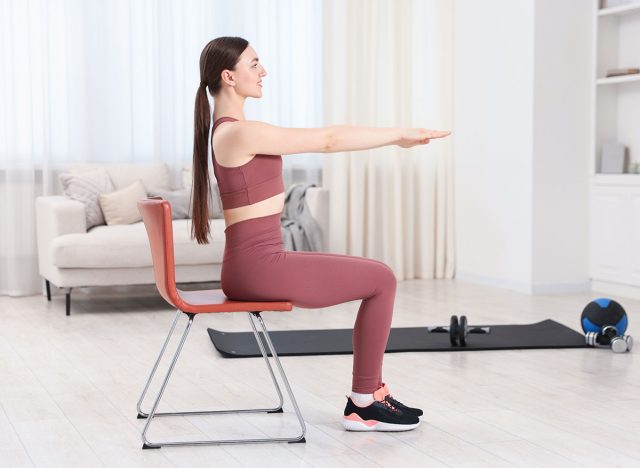
When it comes to walking strength, consistency and control go a long way. You don’t need long sessions to see progress. A few focused movements done regularly can make a noticeable difference in how you move and feel. I’ve seen clients improve their walking confidence just by adding short routines like this before heading out. It sets the tone for better movement right from the first step. Over time, those small efforts stack up.
- Use these as a warm-up: Run through one or two sets before your walk to wake up your muscles and improve coordination.
- Stay consistent: Aim to perform these exercises three to four times per week to build steady progress.
- Focus on control: Smooth, controlled reps help your body learn how to move more efficiently.
- Stand taller during your walks: Carry the posture you build here into your stride for better balance and flow.
- Build gradually: As these movements feel easier, add reps or slow the tempo to keep progressing.
References
- Wu, Ran et al. “Impact of lower limb muscle strength on walking function beyond aging and diabetes.” The Journal of international medical research vol. 48,6 (2020): 300060520928826. doi:10.1177/0300060520928826
- Klempel, Natalie et al. “The Effect of Chair-Based Exercise on Physical Function in Older Adults: A Systematic Review and Meta-Analysis.” International journal of environmental research and public health vol. 18,4 1902. 16 Feb. 2021, doi:10.3390/ijerph18041902
The post 5 Chair Exercises That Restore Walking Strength Faster Than Lunges After 60 appeared first on Eat This Not That.


