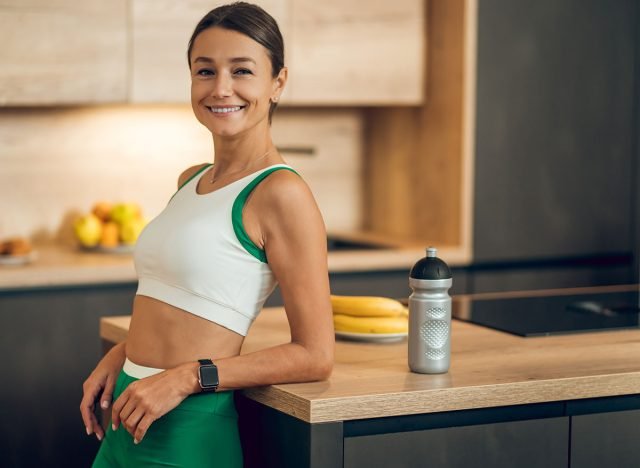
The kitchen counter is already the right height for many supported exercises. It gives your hands a steady place to hold on, keeps you off the floor, and lets you train with more control than you might get from a lower surface. After 60, that can make a short workout feel more doable without making it feel too easy.
Lower-belly fat can be frustrating because it usually changes through the bigger body-composition picture. No single exercise can choose where fat comes off. Core work can help your midsection feel firmer, while daily movement and nutrition support fat loss.
Crunches train the abs, but a counter routine lets you use more of your body. You can brace, drive your knees, press, and lunge while using the counter for balance. That combination helps you build strength and burn more energy in a format that fits right into your day.
This article gives you four kitchen-counter exercises that make lower-belly training simple, supported, and effective. You’ll learn how to use the counter for core strength, higher-effort movement, upper-body work, and lower-body strength without needing a full gym setup.
Incline Plank
Lower-belly training starts with learning how to brace well. The incline plank gives your abs a clear job while the counter keeps the position more manageable than a floor plank. It’s useful after 60 because you can adjust the challenge by stepping closer or farther away. Build a strong plank here, and your mountain climbers, push-ups, and lunges will feel more controlled.
Muscles Trained: Abs, shoulders, chest, glutes, upper back.
How to Do It
- Stand facing the kitchen counter.
- Place both hands on the counter about shoulder-width apart.
- Step your feet back until your body forms a long line.
- Brace your abs.
- Hold the position while breathing steadily.
- Step forward to come out of the plank.
Recommended Sets and Reps: Perform 2 to 3 holds of 20 to 40 seconds.
Best Variations: Higher-hand plank, shorter plank hold, counter forearm plank.
Form Tip: Keep your ribs and hips lined up.
RELATED: If You Can Complete These 5 Bodyweight Exercises After 50, Your Fitness Age Is 10 Years Younger
Incline Mountain Climbers
Once the plank position feels solid, mountain climbers add movement and effort. Keep your core engaged as each knee drives forward, which makes this more useful for lower-belly goals than lying down and chasing a burn. The counter angle lowers the impact and gives you room to control the pace. Start steady, then move faster once your position stays strong.
Muscles Trained: Abs, hip flexors, shoulders, chest, glutes.
How to Do It
- Place both hands on the kitchen counter.
- Step your feet back into an incline plank.
- Brace your abs.
- Drive your right knee toward your chest.
- Step your right foot back.
- Switch sides and continue alternating.
Recommended Sets and Reps: Perform 2 to 3 sets of 20 to 40 seconds.
Best Variations: Slow mountain climber, cross-body mountain climber, higher-hand mountain climber.
Form Tip: Keep your body long as your knees drive.
Incline Push-Up
Push-ups help this routine become more than a core-only workout. The counter lets you train your chest, shoulders, arms, and abs together from a supported angle. More working muscle means more overall effort, which helps when your goal is better body composition. Stronger push-ups also carry over to daily tasks like pushing up from a chair or bracing yourself with your hands.
Muscles Trained: Chest, shoulders, triceps, abs.
How to Do It
- Stand facing the kitchen counter.
- Place your hands on the counter slightly wider than shoulder-width.
- Step your feet back until your body forms a slight angle.
- Bend your elbows and lower your chest toward the counter.
- Press through your hands to return to the start.
- Repeat with steady control.
Recommended Sets and Reps: Perform 2 to 3 sets of 6 to 12 reps.
Best Variations: Wall push-up, slower incline push-up, close-grip incline push-up.
Form Tip: Keep your body in one line.
RELATED: 5 Home Exercises That Firm Underarm Jiggle Faster Than Gym Workouts After 60
Supported Reverse Lunge
A lower-belly plan still needs leg work. Supported reverse lunges add the thighs and glutes to the workout, boosting the training effect beyond what crunches can offer. The counter provides balance support so you can focus on the front leg doing the work. This makes the exercise useful for strength, calorie burn, and the lower-body control you need every day.
Muscles Trained: Quads, glutes, hamstrings, calves, core.
How to Do It
- Stand beside the kitchen counter.
- Hold the counter lightly with one hand.
- Set your feet under your hips.
- Step your right foot back.
- Bend both knees and lower into a comfortable lunge.
- Press through your front foot to stand, then switch sides after your reps.
Recommended Sets and Reps: Perform 2 to 3 sets of 6 to 10 reps per side.
Best Variations: Smaller-range reverse lunge, supported split squat, bodyweight reverse lunge.
Form Tip: Push through your front foot.
RELATED: 4 Morning Exercises That Build Leg Power Faster Than Squats After 60
How to Make Counter Exercises Help Flatten Your Lower Belly After 60
A kitchen-counter workout is only effective if you treat it like a real workout. Use the counter for support, then put real effort into the holds, reps, and intervals. For lower-belly change, pair this routine with daily walking and meals that help you stay consistent with your goals.
- Set your hands in the same spot each time: A consistent setup helps you track whether planks and push-ups are getting stronger.
- Use the plank as your base: Hold a strong position before adding mountain climbers or push-ups.
- Pick a pace you can control: Mountain climbers should raise your breathing without pulling your body out of line.
- Make lunges smooth: Keep the step short enough to lower and stand without rushing.
- Add walking after meals: Short walks help increase daily movement and support fat-loss goals.
- Keep protein in each meal: Protein helps support muscle while you work toward a leaner waist.
- Progress by one change: Add time, reps, or another round only after the current version feels strong.
References
- Garatachea, Nuria et al. “Exercise attenuates the major hallmarks of aging.” Rejuvenation research vol. 18,1 (2015): 57-89. doi:10.1089/rej.2014.1623
- Beekman, Marian et al. “Lifestyle-Intervention-Induced Reduction of Abdominal Fat Is Reflected by a Decreased Circulating Glycerol Level and an Increased HDL Diameter.” Molecular nutrition & food research vol. 64,10 (2020): e1900818. doi:10.1002/mnfr.201900818
- Juan-Recio, C et al. “Short-term effect of crunch exercise frequency on abdominal muscle endurance.” The Journal of sports medicine and physical fitness vol. 55,4 (2015): 280-9.
The post 4 Kitchen-Counter Exercises That Flatten Lower Belly Faster Than Crunches After 60 appeared first on Eat This Not That.


