After ten years of doing very little, most people over 65 assume the strength, balance, and stamina they’ve lost are gone for good. I’ve been a personal trainer for almost 40 years, and since 1998 I’ve been training the next generation of fitness professionals at TRAINFITNESS. Most of it can come back, and the body starts responding within a few weeks once it’s given a reason to.
First, a word on safety, because it shapes everything else. Anyone with a heart condition, chest pain, dizziness, or uncontrolled blood pressure, or anyone who’s had a recent fall or surgery, should see their doctor before starting. Stop any exercise if you get chest pain, unusual breathlessness, or dizziness. And use a sturdy chair or the kitchen counter for support in every one of these.
Slow Sit-to-Stand
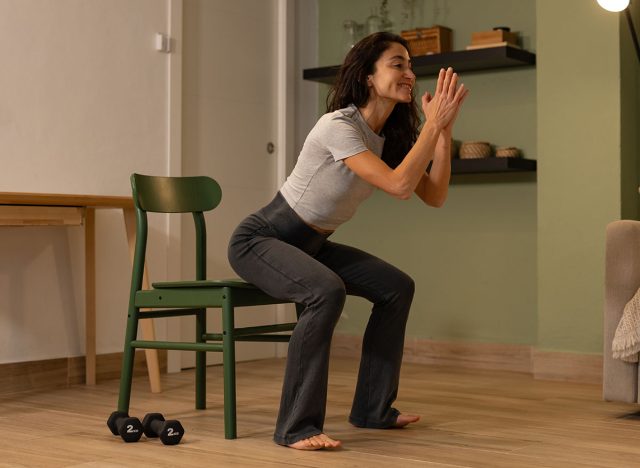
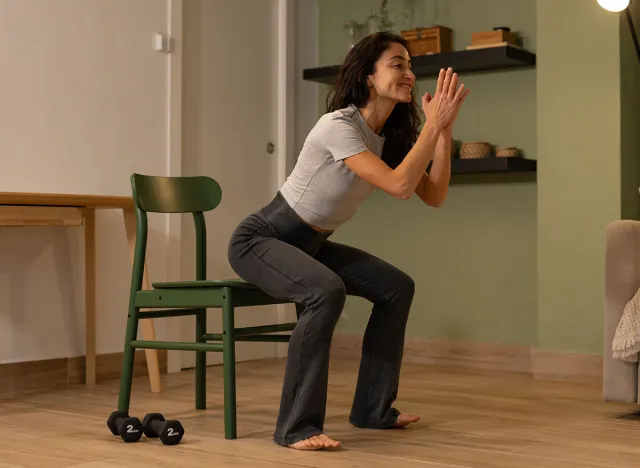
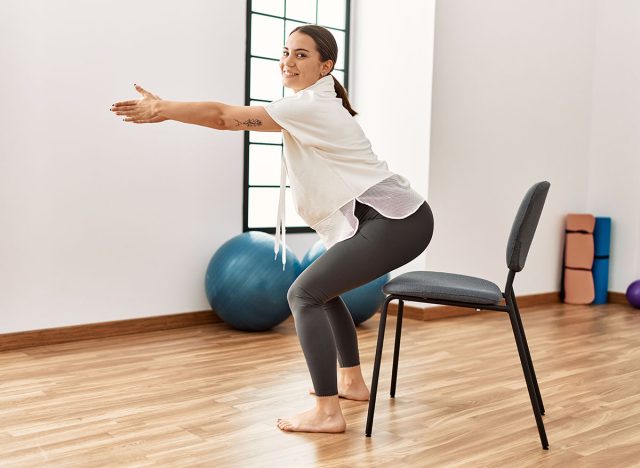
If I had to pick one movement that most affects independence, it’s this one: getting up from a chair, the toilet, or the car. It works the thighs and the butt, the biggest muscles in the body, and the ones that fade fastest when you’re inactive. A stronger sit-to-stand carries over into stairs, walking, and everything else.
How to Do It:
- Sit on a sturdy chair with arms, ideally a higher one to start; add a firm cushion if the chair is low.
- Set your feet flat and hip-width apart, slightly behind your knees.
- Lean forward, nose over your toes, and stand up, using your hands on the chair arms only as much as you need.
- Stand tall.
- Sit back down slowly, taking about 3 seconds to lower.
Avoid These Mistakes:
- Don’t drop back into the chair in one go. Control the way down. The lowering is as useful as the standing up.
- Don’t stand up with your feet too far forward. It makes the whole thing much harder. Feet back, lean forward.
Sets and Reps: Start with 5 to 8 reps and build to 10 to 12, for 2 sets. Progress by using your hands less, then moving to a lower chair.
Form Tip: Feet back, nose over your toes, and take about 3 seconds to sit down.
RELATED: 5 Daily Exercises That Flatten Apron Belly Faster Than Sit-Ups After 60
Supported One-Arm Bag Row

This one strengthens the upper back and arms for lifting, pulling, and carrying, and it helps posture at the same time. The upper back is often the weakest area I find after years of inactivity, partly because so much of daily life involves reaching forward and very little of it involves pulling back.
How to Do It:
- Stand sideways to the kitchen counter and place your left hand on it.
- Step your right foot back a little.
- Hinge forward slightly from the hips, keeping your back flat.
- Hold a grocery bag or a filled 2-liter water bottle in your right hand, arm hanging down; start light, around 2 to 4 pounds.
- Pull the bag up toward your hip, elbow close to your side, squeezing the shoulder blade back.
- Lower slowly.
- Switch sides.
Avoid These Mistakes:
- Don’t twist your body to swing the weight up. Keep the body still.
- Don’t shrug your shoulder toward your ear. Lead with the elbow and let the upper back do the pulling.
Sets and Reps: 10 to 12 reps each side, working up to 2 sets each side.
Form Tip: Lead with the elbow and squeeze the shoulder blade back at the top.
Seated Water-Bottle Overhead Press

The shoulders are what get you reaching up to cupboards, lifting things overhead, and tucking a suitcase into a car trunk. This strengthens them through that range and keeps them moving where they tend to stiffen with disuse. Doing it seated takes the balance demand off, so you can focus on the arms.
How to Do It:
- Sit tall on a firm chair with your feet flat.
- Hold a filled water bottle or a can in each hand at shoulder height, palms facing forward.
- Press both arms up overhead until they’re nearly straight.
- Lower slowly back to shoulder height.
- If one shoulder is stiff, only press as high as is comfortable; the range usually improves week by week.
Avoid These Mistakes:
- Don’t arch your lower back and lean back to get the arms up. Sit tall with your stomach gently tight.
- Don’t lock your elbows hard at the top. Keep a slight bend in them.
Sets and Reps: 8 to 12 reps, for 2 sets.
Form Tip: Sit tall, stomach gently tight, and keep a slight bend in the elbows at the top.
RELATED: The One Exercise Trainers Say Every Woman Over 65 Should Do Daily for Stronger Legs
Step Taps on the Bottom Stair
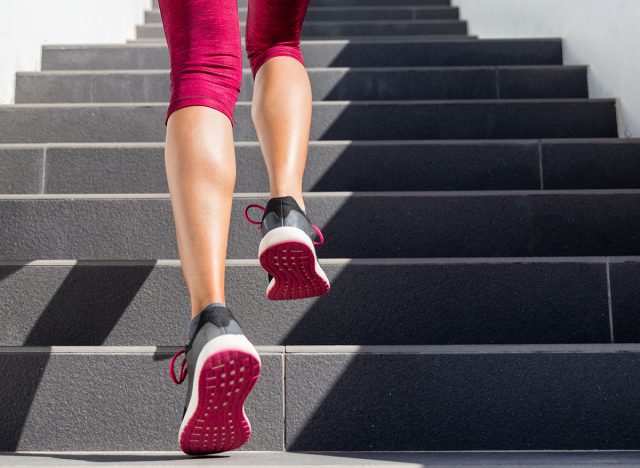
This gets the heart and lungs working with the legs moving continuously, at a level you can control. It also trains shifting your weight from one leg to the other, which is the basis of steady walking. Because you set the pace, it works for almost anyone.
How to Do It:
- Stand facing the bottom stair, holding the banister, or use a low, sturdy step next to the kitchen counter.
- Tap your right foot onto the step, then return it to the floor.
- Tap your left foot onto the step, then return it.
- Keep a steady rhythm, like marching onto the step.
Avoid These Mistakes:
- Don’t look down at your feet the whole time. It tips your weight forward and catches your toes. Glance at the step once to find it, then look ahead.
- Don’t go too fast too soon. Keep the rhythm steady.
Sets and Reps: Start with 30 seconds on, then rest 30 seconds. Build to 1 minute on and 30 seconds off, for 4 to 6 rounds.
Form Tip: You should be breathing harder, but still able to talk.
Clock Reach

This trains balance on one leg while the other foot reaches in different directions, which is how we actually lose balance in real life: stepping sideways, turning, or catching a trip. Better balance feeds straight into more confidence to move, and confidence is usually what’s missing after years of sitting still.
How to Do It:
- Stand next to the kitchen counter, holding it with one hand.
- Imagine you’re standing in the middle of a clock face.
- Standing on your left leg with a soft knee, lightly tap your right foot forward to 12 o’clock, then back to center.
- Tap the same foot out to the side at 3 o’clock, then back to center.
- Tap it behind you to 6 o’clock, then back to center.
- Swap legs: left foot taps forward, out to 9 o’clock, and back.
- As your balance improves, hold the counter with fingertips only.
Avoid These Mistakes:
- Don’t put weight onto the tapping foot. It takes the work off the standing leg and turns this into a stepping exercise. The tap is a light touch; the standing leg does the work.
Sets and Reps: 5 rounds on each leg.
Form Tip: Keep a soft knee on the standing leg and let it do all the work.
RELATED: 4 Standing Exercises That Tighten Flabby Arms Faster Than Gym Classes After 60
What a Sedentary Decade Does

The pattern I see most often starts with the legs. Getting up from a low chair becomes a struggle, getting up off the floor feels out of reach, and stairs turn into a job that needs the banister. That’s usually down to the thighs and the butt muscles thinning out, because those big muscles fade fastest when you’re inactive.
Upper body strength goes the same way. People notice it lifting groceries out of the car, carrying a suitcase, or reaching up to a shelf.
Alongside that comes poor balance, and with it a real fear of falling, which makes people move less and makes everything worse. Stiff joints and low stamina round it off: getting out of breath on a flight of stairs or a gentle hill knocks confidence further.
And on top of the physical side there’s the mental side: not knowing where to start, and worrying about getting hurt. It’s usually a mix of all of these, each one feeding the others.
Why These Beat Yoga

Yoga is good for flexibility, balance, and relaxation, and if you enjoy it, it’s worth doing. But after ten years of inactivity, the biggest losses are strength and stamina, and most yoga doesn’t load the muscles in a way you can steadily increase. You can’t easily add a couple of pounds to a yoga position, so progress stalls. Plenty of the positions are also hard to get into and out of for someone who’s out of practice, especially anything on the floor.
A handful of targeted exercises cover the four things that matter most for independence: leg strength, upper body strength, balance, and stamina. You can do them at home, at whatever level you’re at, and they get harder as you get stronger, which is what makes progress steady rather than hit-or-miss.
If you’re starting from scratch, start well within your limits and go little and often. Expect to feel a bit stiff a day or two after starting; that’s normal. The guide for effort is simple: you should be able to talk while doing these. If you can’t, you’re pushing too hard.
RELATED: 5 Morning Exercises Men Over 70 Need to Stay Strong
How Often to Do This
For weeks 1 and 2, do all five every other day, once through, at the easy end of the rep ranges. That’s 10 to 15 minutes a session, which is deliberately small, because the aim at the start is to show up regularly rather than to work hard.
From week 3, move to three or four times a week and do 2 sets of each. The step taps and the clock reach are light enough that you can do them most days if you want to, which helps with both stamina and balance.
Add a short daily walk alongside them. Start with 5 to 10 minutes and build up from there, at whatever pace you can manage while still holding a conversation.
One rule I give everyone: build up one thing at a time.
- Add reps first.
- Then reduce the support you use.
- Then make the bottles or bags heavier.
Changing everything at once is how people end up sore and put off.
And on stiffness: some the day after is normal, especially in the first two weeks. Sharp pain, or pain that lasts more than a couple of days, means back off and give it a few days before easing back in.
What to Expect
In the first 2 to 3 weeks, expect getting up from a chair to feel easier, less general stiffness, and a bit more energy through the day. It doesn’t take much activity for those early changes, which is why I’d rather people started light and stayed consistent than went hard in week one.
By 6 to 8 weeks, most people I work with are noticeably stronger. Stairs feel easier, carrying groceries is less of an effort, they’re steadier on their feet, and they can walk further before getting out of breath. That’s the point where people start trusting their body again.
Between 3 and 6 months, a lot of the strength and stamina lost over the decade comes back, and the confidence follows it: going out more, doing everyday things without thinking twice.
This takes months, not days, and it has to be kept up. The body responds well at any age, but it only keeps what you keep asking it to do. Stop for long enough and the slide starts again.
The post 5 Exercises That Undo 10 Years of Not Exercising Faster Than Yoga After 65 appeared first on Eat This Not That.


