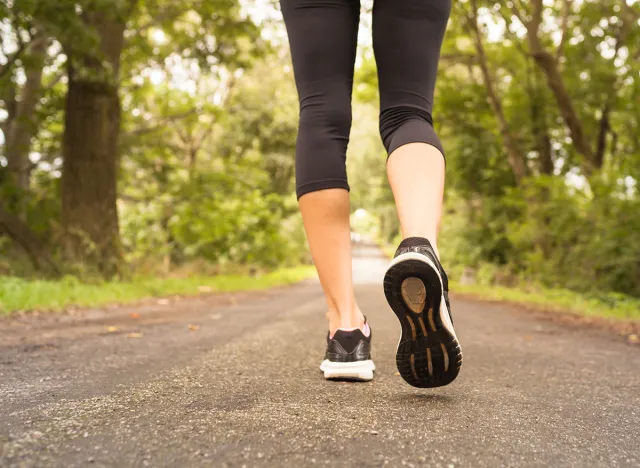
One thing I pay close attention to with older adults is whether the hips are still doing their share. Strong glutes help you stand from a chair with more force and make climbing steps feel easier. They also help control the pelvis while you walk, giving each stride a stronger base.
Walking keeps the hips active, which is valuable, but your usual pace provides limited resistance. Once your body gets used to that workload, it may not provide enough stimulus to rebuild much strength on its own. If stronger hips are the goal after 65, the muscles need a bigger challenge than they get from normal walking.
That’s where combining compound and isolation exercises works well. Deadlifts and loaded bridges let you put more resistance through the glutes, while smaller band exercises can target the muscles that help control the thigh and pelvis. I use both approaches with older adults because no single movement builds hip strength.
This routine gives you both without requiring a long workout. The loaded exercises provide the heavier strength work, and the band or floor movements give you options for easier days. You can keep all four in your regular rotation while adjusting how hard you push them based on recovery.
Dumbbell Glute Bridge
Hip extension is one of the main jobs of the glutes, and the dumbbell bridge lets you load that action directly. Once bodyweight bridges stop challenging you, the dumbbell gives you an easy way to keep progressing. Pause briefly at the top so the glutes finish the rep instead of rushing through it.
Muscles Trained: Glutes, hamstrings, core.
How to Do It
- Lie on your back with your knees bent.
- Place your feet flat on the floor.
- Rest a dumbbell across your hips.
- Press through your feet.
- Lift your hips until they’re level.
- Lower with control and repeat.
Recommended Sets and Reps: Perform 2 to 3 sets of 10 to 15 reps. Rest for 45 to 60 seconds.
Best Variations: Bodyweight glute bridge, paused dumbbell bridge, single-leg glute bridge.
Form Tip: Finish each rep by squeezing your glutes without arching your lower back.
RELATED: 5 Standing Exercises That Rebuild Full-Body Strength Faster Than Gym Classes After 60
Mini-Band Forward Walk
Walking with a band changes the job your hips have to do. The added tension makes your outer glutes work harder to control your leg as you step, giving you more resistance than a regular walk. Keep the steps controlled and maintain tension on the band the whole time.
Muscles Trained: Glutes, outer hips.
How to Do It
- Place a mini-band above your knees or around your ankles.
- Stand with your feet about hip-width apart.
- Bend your knees slightly.
- Step forward with your right foot.
- Follow with your left while keeping tension on the band.
- Continue for the prescribed distance or reps.
Recommended Sets and Reps: Perform 2 to 3 sets of 8 to 12 steps per side. Rest for 30 to 45 seconds.
Best Variations: Band above the knees, band at the ankles, diagonal band walk.
Form Tip: Keep tension on the band instead of letting your feet come together between steps.
Kettlebell Deadlift
This is the movement that gives you the biggest loading opportunity in the routine. The kettlebell deadlift teaches your glutes to produce force through a hip hinge, helping rebuild strength that normal walking rarely challenges. Increase the kettlebell gradually as long as the hinge stays clean.
Muscles Trained: Glutes, hamstrings, back, core.
How to Do It
- Stand with a kettlebell between your feet.
- Set your feet about hip-width apart.
- Push your hips backward.
- Bend your knees enough to reach the handle.
- Drive through your feet and stand tall.
- Push your hips back to lower the kettlebell to the floor.
Recommended Sets and Reps: Perform 2 to 3 sets of 6 to 10 reps. Rest for 60 to 90 seconds.
Best Variations: Elevated kettlebell deadlift, heavier kettlebell deadlift, dumbbell deadlift.
Form Tip: Push the floor away as you stand instead of pulling the weight up with your back.
RELATED: 5 Daily Exercises Women Over 70 Need to Keep Their Core Strong
Side-Lying Clamshell Hold
The clamshell lets you isolate the outer glutes without asking much from the rest of the body. Holding the top position keeps those muscles working long enough to build endurance and strength. Once the bodyweight version feels easy, a mini-band can make a noticeable difference.
Muscles Trained: Glutes, outer hips.
How to Do It
- Lie on your side with your knees bent.
- Stack your hips and feet.
- Keep your feet together.
- Lift your top knee.
- Hold the top position.
- Lower with control and repeat on the other side.
Recommended Sets and Reps: Perform 2 to 3 holds of 15 to 30 seconds per side. Rest for 30 seconds.
Best Variations: Bodyweight clamshell, banded clamshell, clamshell with shorter holds.
Form Tip: Lift the knee only as far as you can without rolling your pelvis backward.
RELATED: 4 Bed Exercises That Flatten Waist Overhang Faster Than Crunches After 65
Keep Building Hip Strength After 65
These exercises can stay in your regular rotation, but the loaded movements don’t need to be pushed hard every day. Give the deadlift and dumbbell bridge more effort when you’re recovered, then use the band work or clamshells for lighter sessions.
- Add resistance when you’re ready: If the last few reps no longer feel challenging, increase the dumbbell or kettlebell slightly. Small jumps in load can keep the glutes adapting without changing the entire routine.
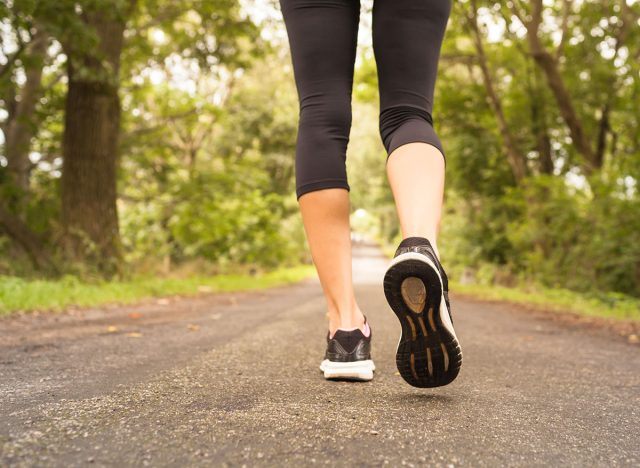
- Keep walking: Walking is still worth doing because it gives you more chances to use the hip strength you’re building. It also helps maintain general activity without adding much recovery demand.
- Use lighter days: Band walks and clamshells work well when you want to train the hips without another heavy session. This gives you daily movement while leaving room to recover from loaded exercises.
- Train both hips evenly: Give each side the same attention, especially if one leg feels stronger. Consistent unilateral work can help keep one side from doing more than its share.
- Watch your control: More weight only helps if you can still move it well. Keep the range you can own, then increase resistance once the movement stays solid from the first rep to the last.
References
- Lanza, Marcel Bahia et al. “The Influence of Aging on Hip Abductor Muscle Torque, Power, Velocity and the Association With Lower Limb Physical Function.” Journal of Geriatric Physical Therapy (2001) vol. 48,2 (2025): E129-E137. doi:10.1519/JPT.0000000000000431
- Gentil, Paulo et al. “Single vs. Multi-Joint Resistance Exercises: Effects on Muscle Strength and Hypertrophy.” Asian Journal of Sports Medicine vol. 6,2 (2015): e24057. doi:10.5812/asjsm.24057
The post 4 Daily Exercises That Rebuild Hip Strength Faster Than Walking After 65 appeared first on Eat This Not That.


