
A tight lower back is one of the complaints I hear most from people over 60, and it’s usually at its worst first thing, when they’re trying to get out of bed. I’ve been a personal trainer for close to four decades and co-founded TRAINFITNESS, the UK’s leading fitness education provider, over 25 years ago. What surprises many of my clients is that the bed itself is a perfectly good place to start loosening that stiffness, before they’ve even put their feet on the floor.
These five exercises can help you ease lower back tightness without leaving your mattress.
Why Your Lower Back Tightens

The pattern I see most often is stiffness on waking that eases once people have been up and about for half an hour or so. Alongside that comes tightness after sitting, in the car, on the couch or at a desk, and difficulty bending far enough to get socks and shoes on. Plenty also describe an ache that builds when they stand for a while, cooking or waiting in line, and tight hips and hamstrings that have been there for years.
The mechanics behind it are fairly simple: the lower back tightens when the muscles around it are either overworking or barely being used. Long spells of sitting shorten the muscles at the front of the hips, and those shortened muscles pull on the lower back. When the glutes and the deep muscles around the middle are weak, the lower back muscles take on extra work, and muscles that overwork stay tense.
The morning stiffness has its own explanation. Overnight the spine has been still for hours and the discs take on fluid while you lie there, which is part of why the back feels stiffest on waking.
The habit that makes all of this worse is guarding, where people move less to protect the back. The back then gets less use and tightens further, so they end up stiffer than when they started.
Before you start these, a few things need a doctor first: back pain with numbness or tingling in the legs, weakness in a leg, pain that’s worse at night and doesn’t ease with rest or movement, or pain after a fall. Changes in bladder or bowel control, or numbness around the groin, need urgent medical attention the same day.
RELATED: 5 Wall Exercises That Firm Sagging Arms Faster Than Gym Classes After 70
Why Bed Exercises Work

The first reason is access. Getting down to the floor and back up again is beyond a lot of people over 60, and if your back is acting up, you’re unlikely to risk it at seven in the morning. The bed puts you on a warm, supported surface without any of that.
The movements themselves are gentle and done lying down, so the back isn’t carrying your body weight while you work it. That makes them suitable on a morning when anything more vigorous would feel wrong.
The timing helps most of all. You can do the routine at the exact moment the back is stiffest, before you’ve put a foot on the floor, which makes getting out of bed easier. That first half hour of the day is the part people dread, and this gives you a way around it before it happens.
The one thing to check is the mattress. A very soft or sagging one gives too little support for some of these moves, the bridge especially, and the lift feels wobbly. If that’s your bed, work on the firmer edge of the mattress or take the bridge to a firmer surface.
Pelvic Tilts
This is where everyone starts, because it’s the smallest movement on the list. It gently moves the lower back through a small, safe range and wakes up the deep muscles around the middle. Doing it first gets the back moving before you ask anything more of it.
How to Do It:
- Lie on your back, knees bent, feet flat on the mattress, hip-width apart, arms by your sides.
- Tighten your stomach muscles and gently flatten your lower back into the bed, letting your tailbone curl up slightly.
- Hold for 3 seconds, breathing out as you flatten.
- Let the back arch slightly away from the bed.
- Repeat.
Avoid These Mistakes:
- Don’t push with your legs or lift your butt off the bed. Your legs and shoulders stay where they are.
Sets and Reps: 10 to 12 slow reps, holding each flattened position for 3 seconds.
Form Tip: Keep the movement small. It comes from your stomach muscles.
RELATED: 5 Stair Exercises That Restore Thigh Muscle Faster Than Treadmills After 65
Heel Slides
This trains the deep stomach muscles to hold the pelvis and lower back still while a leg moves, which is exactly what they do with every step when you walk. When they do that job well, the lower back muscles can stop working overtime.
How to Do It:
- Start in the same position as the pelvic tilt: on your back, knees bent, feet flat, hip-width apart.
- Gently tighten your stomach, as if bracing for a light poke.
- Keeping the lower back still, slowly slide one heel along the mattress until the leg is straight.
- Slide the heel back to the start.
- Repeat with the other leg.
Avoid These Mistakes:
- Don’t let your lower back arch or your pelvis rock from side to side as your leg straightens.
Sets and Reps: 8 to 10 reps on each side.
Form Tip: Only slide as far as you can keep your back still, even if that’s halfway down the bed.
Glute Bridge
The glutes and the lower back muscles share the job of holding you upright. When the glutes are weak, the back takes that work on and stays tense. Stronger glutes take some of the load away from the back.
How to Do It:
- Lie on your back, knees bent, feet flat and hip-width apart, heels about a hand’s length from your butt.
- Squeeze your glutes and lift your hips until your body forms a straight line from shoulders to knees.
- Hold for 2 to 3 seconds.
- Lower your hips slowly back to the bed.
- Use the firmest part of the mattress for this one.
Avoid These Mistakes:
- Don’t push your hips too high and arch your lower back. It puts the strain straight back where you’re trying to ease it.
Sets and Reps: 10 reps, rest for a minute, then do a second set.
Form Tip: Stop when your shoulders, hips and knees are in line and the squeeze is in your glutes.
RELATED: 5 Morning Exercises That Restore Knee Strength Faster Than Squats After 65
Side-Lying Hip Flexor Stretch
The muscles at the front of the hip and thigh shorten over years of sitting, and short ones pull the lower back into an arch. This stretch lengthens them and takes that pull off the back.
How to Do It:
- Lie on your side near the edge of the bed, bottom knee bent for stability, head on the pillow.
- Bend the top knee and take hold of the ankle, or loop a towel or bathrobe belt around it if you can’t reach.
- Keep your stomach gently tight so your back doesn’t arch.
- Draw the knee slowly back behind you until you feel a stretch at the front of the hip and thigh.
- Hold, breathing normally.
- Roll over and repeat on the other side.
Avoid These Mistakes:
- Don’t pull your heel into your butt and arch your back. Take the knee backward instead.
Sets and Reps: Hold for 30 seconds, 2 holds on each side.
Form Tip: The stretch belongs at the front of the hip. If you feel it in your lower back, you’ve pulled too hard and lost the position.
Child’s Pose
It’s a gentle, supported forward stretch for the lower back muscles and the hips, and a comfortable position to finish in before getting up. Kneeling on a bed is kinder to the knees than the floor.
How to Do It:
- Kneel on the bed with your knees apart and your big toes together.
- Sit back toward your heels and walk your hands forward until your forehead rests on the mattress or a pillow.
- Let the lower back lengthen and breathe slowly.
- Walk your hands back to come up.
- Put a pillow between your butt and heels, or under your knees, if the knees complain.
Avoid These Mistakes:
- Don’t force your butt down onto your heels when your knees or hips won’t allow it. Use the pillows instead.
Sets and Reps: Hold for 30 to 45 seconds.
Form Tip: Let the stretch come from your back lengthening rather than from how far down you get.
RELATED: 4 Kitchen-Counter Exercises That Trim Muffin Top Faster Than Sit-Ups After 60
How Often to Do This
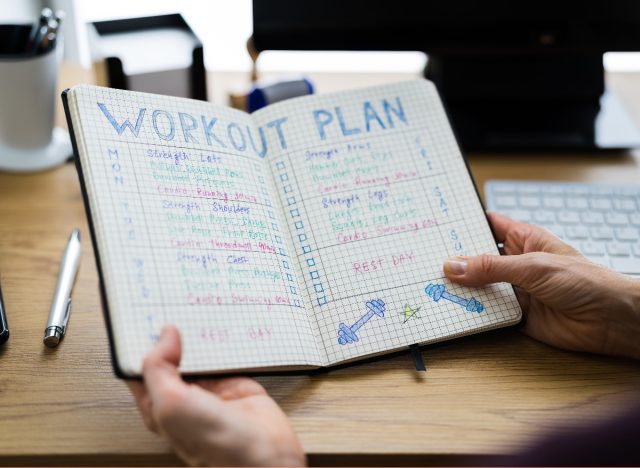
Morning suits most people over 60, because that’s when the back is stiffest. Run through the whole routine before you get up, about 5 to 8 minutes. When you finish, roll onto your side and push up with your arms to come to sitting, rather than hauling yourself straight up from lying flat.
Daily is fine, because nothing here is heavy. If you tighten up after a day of sitting, an evening round helps too, and some people find it settles them for sleep. One round a day is the aim, and two if your back responds well to it.
Two cautions for the rest of the day:
- Avoid heavy bending or lifting in the first half hour after getting up.
- Break up your sitting. Stand up and walk a little every hour or so, because the bed routine on its own won’t do the whole job.
After two or three weeks, add a couple of reps, lengthen the holds, or do the bridges on the floor or another firm surface if your mattress is too soft to hold you steady.
What to Expect

In the first few days, the difference shows on the mornings you do it: getting out of bed is easier, because the back is already loosened before you swing your legs over the edge. On the mornings people skip it, they tend to notice the old stiffness is still there.
By 2 to 3 weeks, morning tightness should ease sooner after you’re up, and bending to put your socks on gets easier. Those tend to be the first lasting changes people report.
The strength side takes longer. Around 6 to 8 weeks, the bridges and heel slides start to make their difference, and the back tightens up less during the day, not only first thing.
These movements ease tightness, but they won’t fix every cause of back pain. If there’s no improvement after four to six weeks, or the pain spreads into your legs or gets worse, see your doctor or a physical therapist. Otherwise, expect the tightness to return if you stop, so treat this as an ongoing habit rather than a course of treatment.
The post 5 Bed Exercises That Reduce Lower Back Tightness After 60 appeared first on Eat This Not That.


