Blood sugar creeping up is one of the things my clients over 60 mention most, usually after a routine checkup or a blood test at the doctor’s office. Nearly all of them have been told to walk more, and I never argue with that advice. But the muscles they already have can do far more of the work of clearing sugar from the blood than most of them think.
I’ve been a personal trainer for almost 40 years, and for almost 30 I’ve been director of TRAINFITNESS, the UK’s leading provider of in-person and online personal training courses. These five exercises can help you bring down your blood sugar after meals at home, with a dining chair, a kitchen counter and two grocery bags. Nothing needs a gym, and nothing takes more than a few minutes at a time.
Why a Daily Walk Falls Short
The pattern I see most is a big rise after meals, especially the evening meal. Someone eats dinner, then sits in front of the TV for two or three hours, and the reading on their meter shows it. That long sit right after a big meal is half the problem.
Plenty come to me after a prediabetes diagnosis from a checkup. Most of them have also been losing muscle for years without realizing it, because nothing in daily life tells you it’s happening. And quite a few mention that heavy, sluggish feeling an hour after eating.
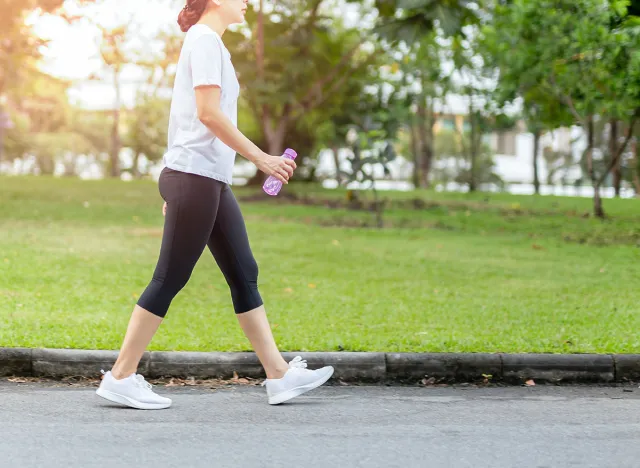
I tell all of them to keep walking, because a walk after a meal genuinely helps. The trouble is what a daily walk usually looks like after 60:
- It’s slow and gentle, so the legs barely work.
- It often happens hours after the meal, or before it, rather than in the half hour when blood sugar is climbing.
- It gets dropped when the weather turns or a knee flares up.
A walk also does nothing for the muscles of the upper body, and nothing to stop the thighs from shrinking. I see clients who walk for 40 minutes every morning before breakfast and still have high readings after dinner. Their legs can handle a slow walk with ease, so they’re not being asked to do much.
RELATED: 5 Home Exercises That Rebuild Leg Stamina Faster Than Treadmills After 65
Why Strength Training Works Faster

When a muscle works, it pulls sugar out of the blood to burn as fuel. A contracting muscle can also take sugar in without much help from insulin, which matters when insulin isn’t doing its job properly. On top of that, muscle is the body’s biggest storage space for the sugar that arrives from a meal.
So the size of the effect comes down to how much muscle you put to work, and how hard. A gentle stroll uses the legs at a low effort. Strength exercises call on more muscle, at a higher effort, in a short space of time, so the amount of sugar taken out of the blood in the minutes after a meal can be bigger than with a stroll.
Over weeks, strength training builds muscle and keeps it. More muscle means more storage space, and the training itself improves how well insulin works. A walk does very little of either job.
This matters more every year after 60, because muscle is lost each decade unless you train it. As the storage space shrinks, blood sugar creeps up. Strength training is what stops that shrinking.
None of this means you should stop walking. The two do different jobs in the body, and my clients do both.
Sit-to-Stand
The thighs and the glutes are the biggest muscles in the body, so when they’re working, they can take in more sugar than any other muscle group. Standing up from a chair puts a real load through them, and doing it again and again works them hard in a short space of time.
How to Do It:
- Sit near the front edge of a firm dining chair, feet flat and hip-width apart.
- Cross your arms over your chest, or rest your hands on your thighs if you need the help.
- Lean your chest forward slightly, then push through your heels until you’re standing fully upright.
- Sit back down over about 3 seconds, only just touching the seat.
Avoid These Mistakes:
- Don’t drop into the chair. Lowering yourself slowly is half the work, and dropping down throws it away.
- Don’t push off your thighs or the chair arms on every rep. Keep your hands crossed on your chest unless you truly need them.
Sets and Reps: 10 to 15 reps, rest a minute, and complete 2 to 3 rounds.
Form Tip: Take about 3 seconds to sit back down, and only just touch the seat before standing again.
RELATED: 4 Wall Exercises That Firm Underarm Jiggle Faster Than Gym Classes After 60
Seated Heel Raises
The deep calf muscle, the soleus, is built for long, steady effort rather than short bursts. As long as it keeps contracting, it keeps pulling sugar from the blood. You can do these sitting at the table the moment you finish eating, and some of my clients do them right through the evening news.
How to Do It:
- Sit with your feet flat on the floor and your knees bent to about 90 degrees.
- Lift your heels as high as you can, keeping the balls of your feet on the floor.
- Lower the heels back down to the floor.
- Keep a steady rhythm, roughly one lift per second.
- Rest a heavy book or a bag of groceries across your knees to make it harder.
Avoid These Mistakes:
- Don’t bounce up and down through a tiny range. Lift your heels as high as they’ll go.
- Don’t quit after 20 reps. It’s the continuous minutes that do the job here.
Sets and Reps: Continue for a few minutes to start, building up to 5 to 10 minutes.
Form Tip: Keep a steady rhythm of about one lift per second for the full time.
Kitchen Counter Push-Up
This brings the chest, shoulders and arms into the job, so a much bigger share of your muscle is drawing sugar out of the blood at the same time. Most people over 60 do very little with their upper body day to day, and a walk does nothing to keep that muscle.
How to Do It:
- Place your hands on the edge of the kitchen counter, slightly wider than your shoulders.
- Walk your feet back until your body is straight from head to heels.
- Bend your arms and lower your chest to the counter over about 2 to 3 seconds.
- Push back up until your arms are straight.
Avoid These Mistakes:
- Don’t let your hips sag or your rear stick up in the air. Keep your body straight from head to heels.
- Don’t bend your elbows only an inch or so. If the push-up feels too hard, step closer to the counter and lower your chest all the way to the edge. That beats standing further back and only doing half the movement.
Sets and Reps: 8 to 12 reps, 2 to 3 rounds.
Form Tip: A full range of motion closer to the counter beats a half rep further away.
RELATED: 5 Chair Exercises That Restore Thigh Muscle Faster Than Gym Sessions After 65
Grocery-Bag Deadlift
This works the back of the legs, the glutes and the back muscles together, which is a lot of muscle in one movement. It’s also the exact skill of picking something up off the floor without hurting your back.
How to Do It:
- Set two filled grocery bags on either side of your feet, or on a low step to make it easier.
- Stand with your feet hip-width apart and a soft bend in the knees.
- Push your hips back, keeping your back flat and your chest up, until you can grip the handles.
- Stand tall by pushing the hips forward and squeezing your glutes.
- Lower the bags back down the same way, with the back flat.
Avoid These Mistakes:
- Don’t round your back and lift with your lower back. Hinge at the hips instead. The hips do the lifting, and the back stays flat throughout.
- If you can’t hold your back flat, put the bags on a step or a chair seat until the hip hinge feels natural.
Sets and Reps: 10 to 12 reps, 2 to 3 rounds.
Form Tip: Think “hips back” on the way down and “hips forward” on the way up.
Grocery-Bag Carry
Carrying weight in both hands while you walk works the grip, the shoulders, the trunk, the hips and the legs all at once. It turns a gentle walk into real work for the muscles, which makes it a good bridge between walking and strength training.
How to Do It:
- Fill two bags with equal weight, 5 to 9 pounds each to start, using bottles of water or cans.
- Stand tall, with your shoulders back and down.
- Walk steadily around the house or yard for 30 to 60 seconds.
- Put the bags down using the same hip hinge as the deadlift.
- Rest, then repeat.
Avoid These Mistakes:
- Don’t lean over to one side or let your shoulders round forward.
- Don’t choose bags so light that there’s no effort in it at all. By the end of the minute the carry should feel like hard work, and your posture should still be tall.
Sets and Reps: 30 to 60 seconds per carry, repeated 3 to 4 times.
Form Tip: Stay tall with your shoulders back and down from the first step to the last.
RELATED: 5 Morning Exercises That Flatten Belly Overhang Faster Than Crunches After 55
How Often to Do This

Timing matters here. Start within about 15 to 30 minutes of finishing a meal, while your blood sugar is still climbing. The evening meal is usually the biggest, and it’s the one followed by hours of sitting, so that’s the meal to target first.
The after-meal session only needs to be 10 minutes. Run sit-to-stands, kitchen counter push-ups and grocery-bag deadlifts as a small circuit, one after the other, then do your seated heel raises once you’re back at the table or watching TV. If 10 minutes in one block doesn’t suit you, split it across the day.
Alongside that, do one full session of all five exercises, 2 to 3 sets each, three times a week on non-consecutive days. That’s the side that builds muscle and keeps your storage space from shrinking.
Keep walking on the other days, and after meals where you can. Combining walking with strength work beats either one on its own.
If you take medication that lowers blood sugar, talk to your doctor or diabetes educator before moving your exercise to right after meals. Exercise right after eating can push your readings lower than you’re used to.
RELATED: Stop Stretching One Muscle at a Time. These 5 Moves Work Your Whole Body
What to Expect
If you use a finger-prick meter or wear a glucose sensor, you’ll often see a smaller rise after meals on the days you do the 10-minute session, right from the first week. It’s the quickest feedback you’ll get.
By 2 to 4 weeks, most people tell me the slump after meals has eased. Sit-to-stands feel steadier, and the rep count creeps up from where it started.
By 8 to 12 weeks, muscle is starting to build, and insulin sensitivity is improving. The HbA1c test your doctor orders reflects roughly the last three months, so that’s the earliest a routine blood test can fairly show the change.
How much and how fast varies with medication, diet, weight and how long your blood sugar has been high. Exercise works alongside your diet and your medical care, not instead of them.
The post 5 Exercises That Lower Blood Sugar Faster Than a Walk After 60 appeared first on Eat This Not That.


