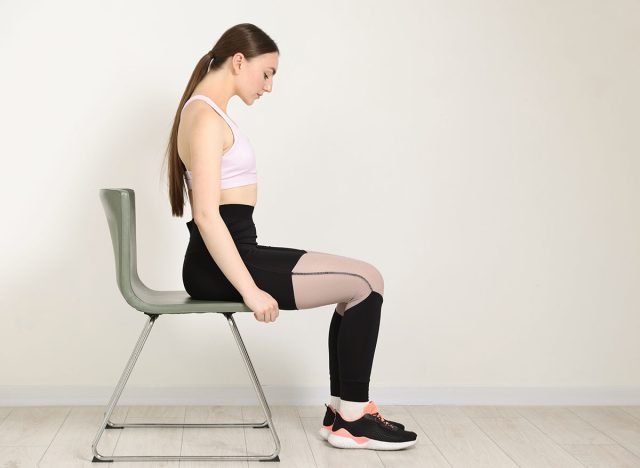
By 65, a decade or more of sitting has usually left its mark on the body. Hips tighten at the front, shoulders round forward, the glutes switch off, and the lower back takes the strain for all of it.
I’ve seen that pattern again and again over almost four decades as a personal trainer and 25 years as director of TRAINFITNESS, the UK’s favourite provider of in-person and online personal training courses.
At this age the fix has to be gentle and doable at home, because anything demanding gets abandoned in a fortnight. Whatever your age, the right gentle work can reverse a lot of that stiffness and weakness. These five exercises take under 10 minutes a day, and you can do every one of them at home.
Your Body Takes the Chair’s Shape
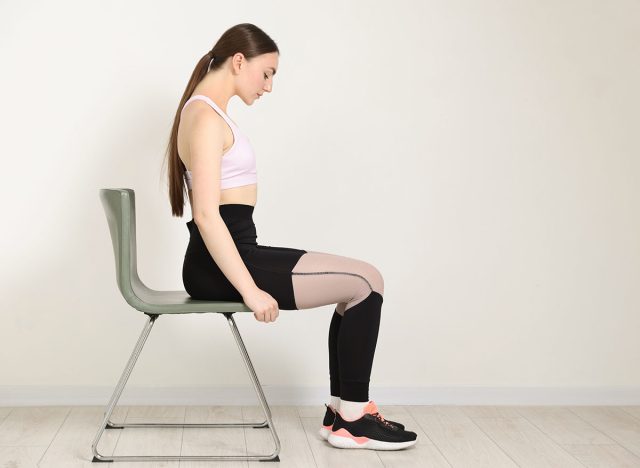
The biggest toll I see is that the body starts to take on the shape of the chair. Sit for a decade and the muscles at the front of the hips and the back of the thighs shorten to match the seated position, while the glutes, which do the work of standing and walking, simply switch off. The body treats the seated shape as its new normal.
Alongside that, posture changes. Years of leaning forward, whether over a desk, a steering wheel or a book, shorten the chest muscles and roll the shoulders inwards, so the upper back stiffens into a curve.
The lower back then takes up work that the hips and glutes should be doing. That’s why so many of my clients complain about it first thing in the morning and after long car journeys.
The consequence I worry about most is what happens to balance and confidence. Stiff hips and weak glutes shorten the walking stride and make small wobbles feel alarming, so people start avoiding movement. The less they move, the stiffer and weaker they become. That loop is far harder to break than the sitting itself.
It also arrives so gradually that almost nobody notices. Posture slips year by year, so people blame turning 65 rather than the decade spent mostly in a chair. When I test their hip range in a first session, the penny usually drops.
RELATED: 4 Bed Exercises That Flatten Midsection Thickening Faster Than Crunches After 65
Why Targeted Work Beats Yoga
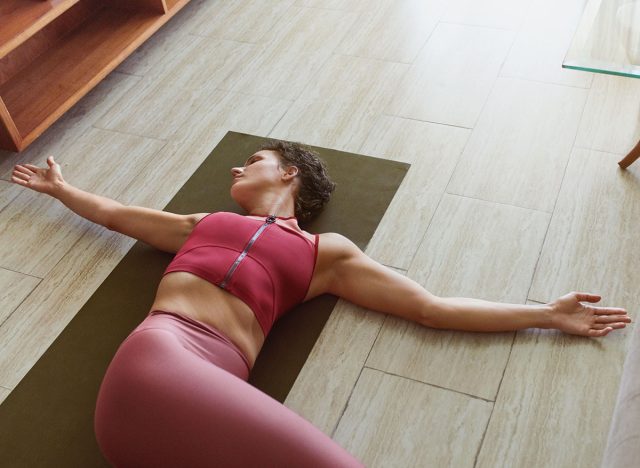
Sitting creates a very specific pattern of problems: tight hip flexors at the front, short hamstrings at the back, a chest that has closed in on itself, and glutes that have stopped pulling their weight. Targeted exercises go straight at that pattern, so every minute you spend is a minute spent on the actual problem. That’s why the changes come faster.
I’d never talk anyone out of yoga, and I’ve recommended it plenty of times over the years. It builds strength, flexibility and calm, and plenty of my clients love their classes. But a class is general by design. You’ll spend time on poses that don’t touch the problem you came in with, and the intensity can be hard to judge when you’re starting from a decade of stiffness. Yoga helps broadly, while targeted work aims narrowly.
Then there’s the practical question of whether the exercise happens at all. Getting to a class means travel, timetables, parking, cost and walking into a room of strangers, and any one of those can put people off.
Movements you can do at your kitchen worktop in three minutes, in your slippers, get done daily. Frequency is where the speed comes from, because a daily stretch outdoes a weekly class within a few weeks.
I’ll add one thing so the picture is complete. You can’t fully undo ten years of sitting, whatever method you choose. Some of the shortening and joint wear is there for good. But most of the stiffness and weakness reverses with consistent, targeted work, and you’ll feel that reversal far sooner than you’d expect.
Standing Quad and Hip-Flexor Stretch
Sitting holds the front of the hip and thigh in a shortened position for hours at a time. Over a decade, the body accepts that shortness as its normal setting, and standing tall begins to feel like effort. Stretching these muscles gives back the length you need to stand upright without the lower back taking the strain.
How to Do It:
- Stand tall beside a sturdy chair or worktop, resting one hand on it for balance.
- Bend one knee behind you and take hold of that ankle.
- Draw the heel gently towards your bottom until you feel a stretch at the front of the thigh and hip.
- Hold for 20 to 30 seconds, breathing easily.
- Release the foot, then repeat on the other leg.
- If you can’t reach your ankle, rest that foot on a chair behind you instead and let the position do the stretching.
Avoid These Mistakes:
- Don’t arch your lower back. It takes the stretch out of the thigh and dumps it into the spine.
- Don’t let the bent knee drift forward. That also shifts the stretch away from the thigh and into the spine.
Form Tip: Keep the knees close together and the tailbone tucked slightly under, and the stretch stays where it should be.
RELATED: Over 60? These 5 Stability Tests Reveal Your Real Age
Prone Leg Lifts
Sitting switches off the glutes and the muscles along the back of the body. Those are the muscles that hold you upright and push you out of a chair. Lifting the leg from a face-down position wakes them up, which helps you stand and walk taller.
How to Do It:
- Lie face down on a mat or a firm bed, with your legs straight.
- Place a cushion under the hips if that’s more comfortable.
- Rest your head on your stacked hands or turn it to one side.
- Squeeze one buttock, then lift that straight leg a few inches off the floor.
- Hold the lift for 2 to 3 seconds, keeping the squeeze in the buttock.
- Lower the leg slowly, then repeat on the other side.
Avoid These Mistakes:
- Don’t arch your lower back to lift the leg higher. The lift should be small, a few inches at most.
Sets and Reps: Do 10 lifts on each leg, resting as often as you need to.
Form Tip: The effort should come from a squeeze in the buttock rather than from the back. If the back starts doing the work, lower the leg and lift less.
Standing Chest-Opener Stretch
Years of leaning forward, over a desk, a steering wheel or a newspaper, shorten the muscles across the front of the chest and roll the shoulders inwards. Once that has happened, standing tall feels impossible no matter how much you try. Opening the chest lets the shoulders sit back where they belong.
How to Do It:
- Stand side-on to a wall, about an arm’s length away.
- Place one forearm flat against the wall with the elbow at shoulder height.
- Keeping the forearm in place, turn your body gently away from the wall.
- Stop when you feel a stretch across the chest and the front of the shoulder.
- Hold for 20 to 30 seconds, breathing slowly.
- Step away, turn to face the other way, and repeat on the other side.
Avoid These Mistakes:
- Don’t force the turn. The chest opens with time, not force.
- Don’t shrug the shoulder up towards the ear.
Form Tip: Ease into the position, keep the shoulder down, and let the stretch deepen over the full hold.
RELATED: 5 Standing Exercises That Improve Balance Better Than Walking After 65
Standing Marches
Sitting slows the circulation and lets the hips stiffen up. Marching on the spot gets the blood moving, mobilises the hips through their range, and trains a little balance at the same time. It also lifts the heart rate gently, which feels good after hours in a chair.
How to Do It:
- Stand tall beside a worktop or a sturdy chair, holding on if you need to.
- Lift one knee up towards hip height, moving slowly and smoothly.
- Lower that foot with control, then lift the other knee.
- Keep the rhythm steady, as if marching slowly on the spot.
- Stay tall throughout, without leaning back.
Avoid These Mistakes:
- Don’t lean back to get the knee up.
- Don’t rush until the movement becomes a swing. Neither gives the hips what they need.
Sets and Reps: Do 20 lifts in total, and rest whenever you need to.
Form Tip: Stay tall, lift each knee under control, and care more about the quality of the movement than the height.
Standing Hamstring Stretch
Sitting holds the hamstrings short for hours on end, which tugs on the pelvis and adds to lower-back tightness. Lengthening them eases that pull, so the lower back often feels better almost straight away. It also makes bending and walking easier once the backs of the legs stop fighting the movement.
How to Do It:
- Stand facing a low step or a sturdy box.
- Place one heel on the step with that leg straight and the toes pulled up.
- Keep the back long and the chest lifted.
- Hinge forward gently from the hips until you feel a stretch down the back of the thigh.
- Hold for 20 to 30 seconds without forcing the reach.
- Step down and repeat on the other leg.
Avoid These Mistakes:
- Don’t round your back to reach further. You’re not trying to touch your toes.
Form Tip: Hinge from the hips with a long, flat back. Keep the chest lifted, and stop as soon as the stretch arrives along the back of the thigh.
RELATED: 4 Stair Exercises That Restore Leg Strength Faster Than Gym Machines After 70
How Often to Do This
These five movements are gentle enough to do every day, and that’s exactly how I’d use them. Done in sequence, the whole set takes under 10 minutes, so a daily habit stays realistic rather than becoming a chore. None of them overload the joints, so there’s no need for rest days.
I’d break them up across the day rather than doing them as one block:
- Do the quad and hip-flexor stretch while the kettle boils.
- Do the prone leg lifts when you get out of bed.
- Do the standing marches mid-morning after a long sit.
- Do the chest opener and hamstring stretch in the evening.
Short bursts fit more easily into a day, and people stick with them far better.
Alongside the movements, build one more habit: stand up and move for a couple of minutes every 30 to 45 minutes of sitting. A kitchen timer or the advert breaks on television work well as reminders. This stops the hips tightening back up between sessions and keeps the circulation moving, which the legs need after years spent sitting.
If you prefer a set weekly pattern, that works too: the stretches on most days, and the prone leg lifts and standing marches on three to five days a week. Just avoid turning it into an all-or-nothing plan. On a bad week, three minutes is still worth having, and the routine you keep will always beat the routine you abandon.
What to Expect

In the first week or two, the changes are mostly about ease. Morning stiffness eases, getting out of a chair feels smoother, and the first steps of the day hurt less. That early improvement comes from circulation and from muscles waking back up, and it arrives quickly if you’re doing the movements most days.
By 6 to 8 weeks, the deeper changes show. The hips and lower back feel looser, standing tall takes less effort because the muscles at the front and the back are sharing the work again, and balance feels steadier on the stairs. This is also when people start noticing their posture in photographs, or comments from family that they look taller.
A decade of sitting isn’t fully undone, by these five movements or by anything else. Some of the tissue shortening and joint wear is yours to keep. But most of the stiffness and weakness reverses with consistency, and that part of the process is far more under your control than most people realise.
Consistency is what decides how far you get. These movements only keep working while you keep doing them, because sitting remains part of daily life. Do them most days, keep standing up through the day, and you’ll hold the gains for years rather than weeks.
The post 5 Exercises That Undo 10 Years of Sitting Faster Than Yoga After 65 appeared first on Eat This Not That.


