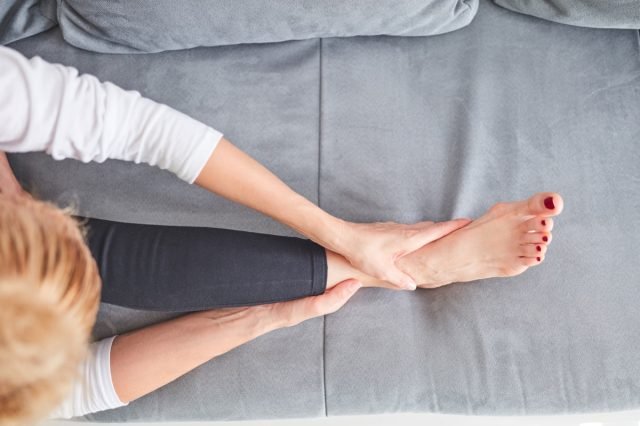
Balance is something most of us never think about until it starts to go: a wobble stepping off a kerb, a sudden grab for the handrail on the stairs. A simple self-test at home can show you where you really stand.
I’ve been a personal trainer for almost 40 years, and I’ve co-founded and run TRAINFITNESS, the UK’s best provider of personal training courses, for the last 25. These tests are a useful guide to how your stability compares for your age, not a literal measure of biological age.
These five simple tests will show you how your stability stacks up for your age, and exactly what to work on next.
What Changes After 60
A few things change at once, and they compound. The balance organs in your inner ear lose sensitivity, your vision gives you less in dim light, and position sense, the constant feedback from your feet, ankles and joints, slows down. Your balance system makes hundreds of tiny corrections a second from those three inputs, so when all three fade a little, the corrections start arriving late.
Muscle changes as well. Strength around the hips, thighs and trunk thins out unless you train it, and reaction time slows, so a small wobble takes longer to catch before it becomes a stagger.
You won’t notice any of this from one week to the next. It shows up as a pause after standing, or turning on the spot with care rather than speed.
That’s why testing matters at this stage. Balance is one of the few fitness qualities that hands you a clear number, and a number gives you a baseline to compare against in six months. Catch a decline while it’s small and it’s very fixable, because stability responds to practice at any age. I’ve watched clients in their eighties go from wobbly ten-second stands to steady half-minute holds inside a few months of short daily work.
The framing matters too. The “real age” these tests hint at is a motivational guide rather than a medical or biological age. What they actually measure is stability and fall risk. Scoring above the typical range for your age means your stability is holding up well, but it doesn’t make you literally younger.
Before you try anything here, set up safely. Do every test next to a wall or a sturdy worktop, with something to grab within easy reach, and ideally have someone else in the room. Stop the moment you feel dizzy or unsteady, and try again another day.
RELATED: 5 Standing Exercises That Improve Balance Better Than Walking After 65
Before You Start
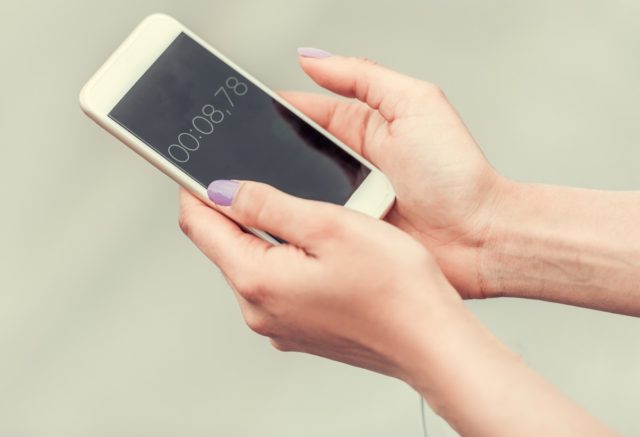
One safety point before the detail, because it applies to all five: set up next to a wall or a sturdy worktop, with something to grab within reach and ideally someone nearby, and stop if you feel dizzy or unsteady.
You’ll need a stopwatch, or the timer on your phone, and a sturdy chair for the last two tests. Wear flat shoes or go barefoot. Do them in this order, with a few minutes’ rest between each.
Single-Leg Stand, Eyes Open
This tests your basic static balance on one leg. It’s the foundation the rest of stability sits on, and it gives the cleanest single snapshot of where you stand today.
How to Do It:
- Stand beside a sturdy worktop, with something to grab within easy reach.
- Shift your weight fully onto one leg and lift the other foot just off the floor.
- Start the timer the moment the foot leaves the ground.
- Stop it when you have to put the foot down or grab the support.
- Rest for a minute, then repeat on the other leg.
Avoid These Mistakes:
- Don’t hold onto the support at any point. The attempt doesn’t count if you do.
- Don’t rest the lifted foot against the standing leg. It acts like a kickstand, and it can inflate the time by a lot.
The Target: About 30 seconds on each leg in your sixties, around 20 seconds in your seventies, and 10 seconds or more in your eighties.
Form Tip: One leg will usually be weaker than the other, so test both and take note of the gap.
RELATED: 4 Stair Exercises That Restore Leg Strength Faster Than Gym Machines After 70
Single-Leg Stand, Eyes Closed
This tests balance with your vision switched off. That leaves the inner ear and your position sense to carry everything alone, and those are the systems that fade fastest with age, which makes this the most revealing of the standing tests.
How to Do It:
- Set up exactly as before, with a worktop or wall right beside you.
- Get steady on one leg with your eyes open.
- When you feel settled, close your eyes and start the timer.
- Stop the clock if you open your eyes, put the foot down, hop or grab.
- Rest, then repeat on the other leg.
Avoid These Mistakes:
- Don’t open your eyes mid-hold. The attempt doesn’t count if you do.
- Don’t hop, or touch the lifted foot down and carry on. A hop is a reset, so the clock stops there.
The Target: About 10 seconds in your sixties, around 7 in your seventies, and a few seconds in your eighties. Closing your eyes removes the biggest input your balance system has, which is why the numbers sit far below the eyes-open version.
Tandem Stance (Heel-to-Toe)
This tests balance on a narrow base. Heel to toe removes the wide, side-by-side stance you’ve used your whole life, so it challenges side-to-side control, the part that catches you when you trip or get nudged.
How to Do It:
- Place one foot directly in front of the other, heel touching toe, as if on a tightrope.
- Fold your arms across your chest or let them hang by your sides.
- Look at a fixed point ahead, settle, and start the timer.
- Stop when you have to move your feet, unfold your arms or grab support.
- Swap which foot is in front and test again.
Avoid These Mistakes:
- Don’t let your feet drift apart into a normal stance. The hold doesn’t count if they do.
- Don’t step out to catch your balance.
The Target: Thirty seconds held steady is a good result at this age. A full minute without wobbling puts your narrow-base control well ahead of the typical range for your sixties or seventies.
Form Tip: Most people widen the stance without noticing, so have someone watch or film the attempt.
RELATED: 4 Kitchen-Counter Exercises That Smooth Bat Wings in 21 Days After 65
30-Second Sit-to-Stand
This tests leg strength and dynamic stability working together. Standing up is what gets you out of a chair, off the toilet and up off the floor, and it needs strength and control at the same time, so it earns its place in a stability set.
How to Do It:
- Sit in a sturdy chair, ideally backed against a wall so it can’t slide.
- Fold your arms across your chest.
- On “go”, stand fully upright, then sit fully back down.
- Complete as many full stands as you can in 30 seconds.
- Count only the reps where you stood right up and sat right back down.
Avoid These Mistakes:
- Don’t push off your thighs or the armrests with your hands. That rep doesn’t count.
- Stand fully upright and sit fully down on every rep. Half stands are the most common way the score gets flattered.
The Target: About 12 or more in your sixties, 10 or more in your seventies, and 8 or more in your eighties. This one leans on leg strength as much as balance, and weak legs and shaky balance feed each other.
Timed Up and Go
This tests balance, turning and walking in one continuous chain. It copies the everyday sequence of getting up, moving somewhere and sitting back down, and it’s the movement most linked to fall risk, the reason physiotherapists use it in clinics.
How to Do It:
- Sit in a sturdy chair with a clear three-metre path in front of you, and mark the three-metre point.
- On “go”, stand up and walk at your normal pace to the mark.
- Turn, walk back to the chair and sit down.
- Time the whole sequence, from the moment you start standing up to the moment you’re seated again.
- One clean attempt is enough, two if you want a comparison.
Avoid These Mistakes:
- Don’t rush to the point of feeling unsafe. The test is meant to reflect your normal walking day rather than a sprint.
- Don’t use your hands to push up from the chair.
The Target: Under about 12 seconds is a good result. If you’re taking much longer than that, it’s a sign to work on it, and it’s worth asking whether leg strength, balance confidence or a stiff hip is the slow part before you put it down to age.
RELATED: 5 Daily Exercises Women Over 65 Need to Keep Their Waist Trim
What Your Scores Mean

Each test looks at a different slice of stability, so the pattern across all five tells you more than any single score. The eyes-open stand is plain static balance, the eyes-closed stand tests the inner ear and position sense, and the tandem stance is narrow-base control. The sit-to-stand is leg strength, and the timed up and go is balance, turning and walking combined.
Because they measure different things, you can sail through one and struggle with another, and that mismatch is the useful part. A comfortable 30 seconds eyes-open that collapses to five with your eyes shut means your vision is doing a lot of compensating for fading position sense. A strong sit-to-stand with a slow up and go points at balance and turning rather than strength. Whichever test let you down is the one to practise.
Passing most of the five at target means your stability is holding up well for your age. Falling short on one or two isn’t a cause for alarm, because every area here responds to a few minutes of daily practice.
If you couldn’t manage a single-leg stand at all, or your up and go came in closer to 20 seconds than 12, that’s where your effort goes first, and it’s worth a GP conversation if you’ve already had a fall.
On the “real age” framing: no stopwatch can tell you your biological age. What these numbers give you is a comparison against the typical range for your age, and a baseline to beat. Treat the figure as a motivational guide, train against it, and retest in a month to watch it move.
How to Improve Your Score
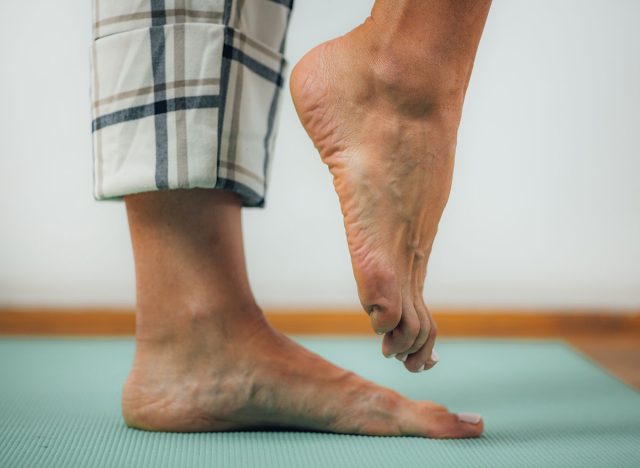
Start with the exact movement you failed and practise it near support, a little every day. Balance responds to frequency far more than intensity, so two minutes daily beats one long session a week. Give it four to six weeks, then retest under the same conditions.
If the single-leg stands or the tandem stance were weak, the drill is the single-leg stand itself, done daily beside the worktop. Begin with a fingertip or two resting on the surface. When that feels solid, hover the hand just above it, then let go altogether, then fold in the tandem stance and, eventually, eyes-closed work, always within reach of something to grab. A few attempts per leg, most days, is plenty.
For the sit-to-stand, start higher and build down. A cushion or two on the seat raises the chair and makes the first stands manageable. Once ten reps feel comfortable up there, take the cushions away and work toward the lower chair, arms crossed throughout, stopping the set the moment you have to push off your thighs.
For the up and go, the answer is walking and turning, practised slowly. Walk a few metres at a comfortable pace every day, turn, walk back and sit, then stand and go again, making a loop of it. If tight turns feel wobbly, start with wide turns and tighten them over the weeks, using the same route each time so you can feel the difference.
Whatever you practise, keep it little and often, always next to a wall or worktop, and stop if you feel dizzy or unsteady. If a score was far below target, or a fall has happened in the past year, speak to your GP before you build the training up. Improvements in balance tend to come faster than people realise once the practice turns daily.
The post Over 60? These 5 Stability Tests Reveal Your Real Age appeared first on Eat This Not That.


