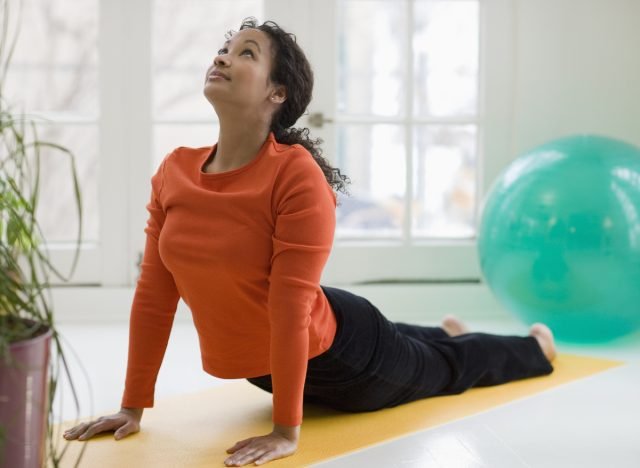
Mobility tends to get your attention when something that used to feel easy starts taking more effort. Maybe your squat feels tighter, turning to look behind you feels limited, or getting down toward the floor takes a little more planning. After 60, keeping your joints moving through comfortable ranges helps you stay active without feeling like your body is constantly negotiating with you.
Gym machines have plenty of value for building strength, but most guide you through one set path. Mobility and flexibility need more freedom. Your hips need to move side to side, your upper back needs to rotate, and your shoulders benefit from reaching through different positions. Home exercises give you room to work on those movements together.
I use mobility work with athletes and everyday clients for the same basic reason: moving well makes everything else easier to train. You also don’t need a long stretching session to get there. A few exercises that ask you to squat, rotate, reach, and move between positions can cover a lot of ground.
The six moves below take your body through ranges that machines rarely ask you to explore. Some are strength-based, while others flow through longer stretches, giving you a simple home routine to keep your whole body moving well after 60.
Lateral Lunge
Most daily movement happens straight ahead, so the hips can lose some comfort moving side to side. Lateral lunges bring that direction back into your training while strengthening the legs through the range. You’ll open the inner thigh on one side while the other leg handles the work, making this a useful mobility drill you can also get stronger with.
Muscles Trained: Glutes, quads, hamstrings, inner thighs.
How to Do It
- Stand with your feet together.
- Take a wide step to the right.
- Push your hips back as you bend your right knee.
- Keep your left leg comfortably straight.
- Press through your right foot to return to standing.
- Complete your reps, then switch sides.
Recommended Sets and Reps: Perform 2 to 3 sets of 6 to 10 reps per side. Rest for 30 to 45 seconds.
Best Variations: Supported lateral lunge, shallow lateral lunge, alternating lateral lunge.
Form Tip: Sit your hips back toward the working side.
RELATED: The 12-Minute Standing Routine That Builds More Strength Than Lifting Weights After 65
Downward Dog to Cobra
A lot happens during one slow transition from downward dog into cobra. Your shoulders move overhead, your spine shifts, and the backs of your legs get a gentle stretch before you open through the front of your body. I like this flow when someone feels generally stiff because you can explore several areas without forcing any one stretch. Keep the movement comfortable and shorten the range wherever you need to.
Muscles Trained: Shoulders, abs, upper back, hamstrings, calves.
How to Do It
- Start on your hands and knees.
- Lift your hips up and back into downward dog.
- Let your heels move toward the floor as far as comfortable.
- Shift your body forward and lower your hips.
- Gently lift your chest into a cobra position.
- Move back into downward dog and repeat.
Recommended Sets and Reps: Perform 2 to 3 sets of 5 to 8 slow reps. Rest for 30 seconds.
Best Variations: Elevated downward dog to cobra, smaller-range flow, downward dog hold.
Form Tip: Move only through a range that feels comfortable in your back.
Bodyweight Squat
Squatting is one of the easiest ways to see how well your ankles, knees, and hips are working together. Practicing the movement regularly helps you maintain the range you use for chairs, stairs, and picking things up. You also get lower-body strength while you work on mobility, which makes the squat especially useful after 60. Use a chair as a target if you want a little more confidence with depth.
Muscles Trained: Quads, glutes, hamstrings, calves, core.
How to Do It
- Stand with your feet about shoulder-width apart.
- Point your toes slightly outward if that feels natural.
- Bend your knees as you sit your hips back and down.
- Lower as far as you can comfortably control.
- Press through your feet to stand.
- Reset and repeat.
Recommended Sets and Reps: Perform 2 to 3 sets of 8 to 12 reps. Rest for 30 to 45 seconds.
Best Variations: Chair squat, supported squat, squat hold.
Form Tip: Use a depth you can control from top to bottom.
RELATED: 3 Wall Exercises That Smooth Arm Flab in 21 Days After 65
Standing Rotation
Turning gets overlooked until you notice you’re moving your whole body just to look over one shoulder. Standing rotations give your upper back regular practice moving through that range while your feet stay planted. They fit easily into a home mobility routine and can feel especially good after long stretches of sitting.
Muscles Trained: Obliques, abs, upper back.
How to Do It
- Stand with your feet about shoulder-width apart.
- Bring your hands together in front of your chest.
- Keep a slight bend in your knees.
- Rotate your chest comfortably to the right.
- Return through center.
- Rotate to the left and continue alternating.
Recommended Sets and Reps: Perform 2 to 3 sets of 6 to 10 reps per side. Rest for 20 to 30 seconds.
Best Variations: Smaller standing rotation, wall-supported rotation, seated rotation.
Form Tip: Let your upper back create the turn.
Cat-Cow
When your back feels stiff, cat-cow gives you a simple way to start moving it again. You alternate between rounding and gently extending the spine, which lets you explore motion without adding load. This one works well early in the routine or first thing in the morning when your back needs a few reps before larger movements feel comfortable.
Muscles Trained: Spinal erectors, abs, upper back, shoulders.
How to Do It
- Start on your hands and knees.
- Place your hands under your shoulders.
- Gently round your back toward the ceiling.
- Let your head follow the movement naturally.
- Reverse the position by lifting your chest and gently extending your spine.
- Continue moving between both positions.
Recommended Sets and Reps: Perform 2 to 3 sets of 6 to 10 slow reps. Rest for 20 to 30 seconds.
Best Variations: Seated cat-cow, standing cat-cow, smaller-range cat-cow.
Form Tip: Move slowly enough to feel each part of the motion.
RELATED: 5 Chair Exercises That Shrink Belly Overhang Faster Than Gym Machines After 55
World’s Greatest Stretch
If you only have time for one mobility drill, the World’s Greatest Stretch earns its name. The lunge position opens the hips, then the rotation brings your upper back into the movement. It’s especially useful when you want to prepare your body for walking, strength training, or a more active day. Put your hands on an elevated surface if reaching the floor feels too aggressive.
Muscles Trained: Glutes, hip flexors, hamstrings, upper back, shoulders.
How to Do It
- Start in a high plank or elevated plank position.
- Step your right foot outside your right hand.
- Settle into a comfortable lunge.
- Rotate your right arm toward the ceiling.
- Bring your hand back down.
- Step back and repeat on the other side.
Recommended Sets and Reps: Perform 2 to 3 sets of 4 to 6 reps per side. Rest for 30 seconds.
Best Variations: Elevated World’s Greatest Stretch, shortened lunge position, lunge with rotation.
Form Tip: Use an elevated surface if the floor feels too far away.
RELATED: If You Can Complete These 3 Core Holds After 60, Your Abs Are Stronger Than People Half Your Age
How to Get More From Your Mobility Routine After 60
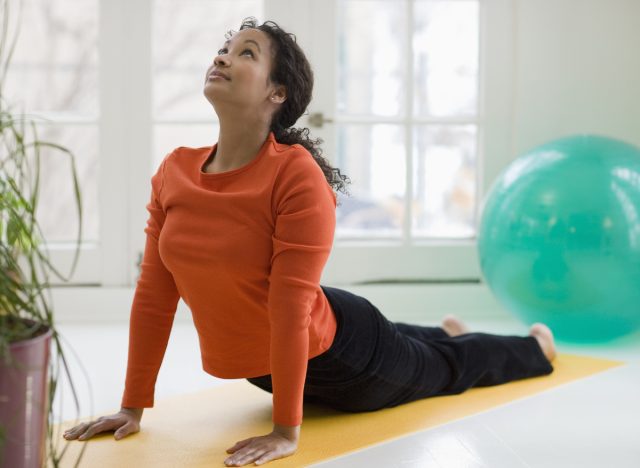
Mobility usually improves when you give your body regular chances to move through the ranges you want to keep. Two or three focused sessions each week can go a long way, and shorter mobility breaks on other days help you stay loose between workouts.
- Use mobility before activities you already do: Run through a few exercises before a walk, workout, or active day so the routine has a regular place in your schedule.
- Give tighter areas a little more attention: If one hip or shoulder consistently feels restricted, add an extra set on that side without forcing the range.
- Keep some strength work in your week: Strong muscles help you control the mobility you’re building instead of simply reaching a position once.
- Break up long sitting periods: A few squats, rotations, or lateral lunges during the day can keep stiffness from piling up.
- Measure progress by movement: Pay attention to easier squats, smoother turns, or more comfortable floor transitions instead of chasing a specific stretch depth.
- Stay consistent before adding more: Repeat the routine for a few weeks before making the movements deeper or adding longer sessions.
- Use the floor only when it works for you: Elevate exercises like the World’s Greatest Stretch or downward dog when getting down and back up becomes the limiting factor.
References
- Ferrucci, Luigi et al. “Age-Related Change in Mobility: Perspectives From Life Course Epidemiology and Geroscience.” The journals of gerontology. Series A, Biological Sciences and Medical Sciences vol. 71,9 (2016): 1184-94. doi:10.1093/gerona/glw043
- Stathokostas, Liza et al. “Flexibility of older adults aged 55-86 years and the influence of physical activity.” Journal of Aging Research, vol. 2013 (2013): 743843. doi:10.1155/2013/743843
The post 6 Home Exercises That Restore Full-Body Mobility Faster Than Gym Machines After 60 appeared first on Eat This Not That.


