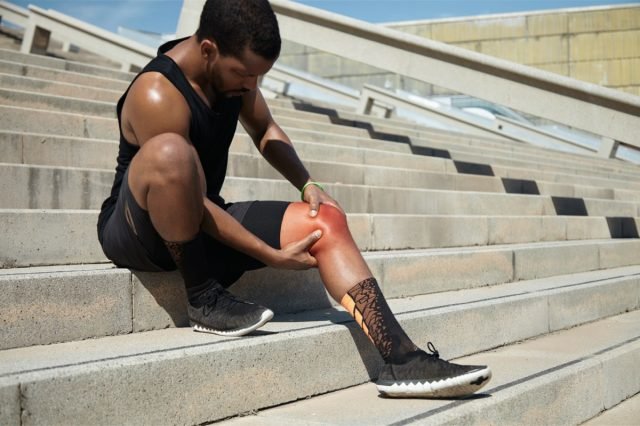
Walk up a flight of stairs, and your knees tell you pretty quickly where your strength stands. Each step asks one leg to push you upward or lower you back down with control. Squats still belong in a good leg routine, but stairs train knee strength in a pattern you already use during the day.
The railing changes the whole feel of the workout. It gives you support when you need it, while the step gives your foot a clear target on every rep. That makes stair exercises a practical choice after 60, especially if regular squats feel too general or hard to measure.
Your knees also depend on more than the quads. The hips help control each step, and the calves support the lower leg as you move. When those areas get stronger together, stairs, curbs, hills, and chair stands usually feel steadier.
Below are simple stair exercises that build strength around the knee without making the routine complicated. Focus on stepping up, lowering with control, strengthening the calves, and building confidence one rep at a time.
RELATED: 4 Wall Exercises That Trim Apron Belly Faster Than Crunches After 60
Supported Step-Up
Step-ups are one of the most direct ways to build knee strength because they train the same pattern you use on stairs. One leg pushes, the knee tracks well, and the hip helps finish the movement. The railing lets you practice with support, so you can focus on clean reps instead of fighting for balance. Start with a low step and make the working leg do the climb.
Muscles Trained: Quads, glutes, hamstrings, calves, core.
How to Do It
- Stand facing the stairs.
- Hold the railing lightly.
- Place your right foot fully on the first step.
- Press through your right foot and step up.
- Bring your left foot to the step.
- Step back down with control, then repeat before switching sides.
Recommended Sets and Reps: Perform 2 to 3 sets of 6 to 10 reps per side.
Best Variations: Lower step-up, slower step-up, step-up with a brief pause.
Form Tip: Keep your whole foot on the step.
Supported Stair Toe Tap
Lowering is where many knees feel the most unsure. A stair toe tap helps you train that control in a small range before moving into bigger step-downs. The leg on the step does the work as the other foot taps the floor. This builds confidence because you can use the railing, shorten the range, and keep every rep smooth.
Muscles Trained: Quads, glutes, calves, hamstrings, core.
How to Do It
- Stand on the bottom step with your right foot planted.
- Hold the railing lightly.
- Let your left foot hover near the floor.
- Bend your right knee and tap your left toes to the floor.
- Press through your right foot to stand tall again.
- Complete your reps, then switch sides.
Recommended Sets and Reps: Perform 2 to 3 sets of 5 to 8 reps per side.
Best Variations: Smaller-range toe tap, supported step-down, slower toe tap.
Form Tip: Bend the standing knee slowly.
RELATED: 3 Simple Exercises That Rebuild Bone Strength Better Than Calcium Supplements After 60
Stair Calf Raise
The calves help your knees more than most people realize. They support your ankles, help control each step, and make walking or climbing feel steadier. A stair calf raise gives you a simple way to strengthen the lower legs with the railing close by. Use a controlled lift and lower so the calves do real work through each rep.
Muscles Trained: Calves, ankles, feet, quads.
How to Do It
- Stand on the bottom step while holding the railing.
- Place the balls of your feet on the edge of the step.
- Let your heels lower slightly.
- Press through the balls of your feet and lift your heels.
- Pause briefly at the top.
- Lower with control.
Recommended Sets and Reps: Perform 2 to 3 sets of 10 to 15 reps.
Best Variations: Floor calf raise, smaller-range stair calf raise, single-leg assisted calf raise.
Form Tip: Lift and lower without bouncing.
Supported Stair March
A stair march keeps the movement basic while adding balance and hip control. One foot stays on the step as the other knee lifts, which makes the standing leg work harder to keep you steady. This helps the knee because strong hips and better balance reduce the wobble people often feel on stairs. Keep the railing close and move at a pace you can control.
Muscles Trained: Quads, glutes, hip flexors, calves, core.
How to Do It
- Stand facing the stairs.
- Place your right foot on the first step.
- Hold the railing lightly.
- Press through your right foot and lift your left knee.
- Lower your left foot back to the floor.
- Repeat your reps, then switch sides.
Recommended Sets and Reps: Perform 2 to 3 sets of 6 to 10 reps per side.
Best Variations: Lower knee lift, slower stair march, step-up march.
Form Tip: Stand tall before each knee lift.
RELATED: 7 Daily Drills That Keep Your Mobility Decades Younger After 60
How to Build Knee Strength on Stairs After 60
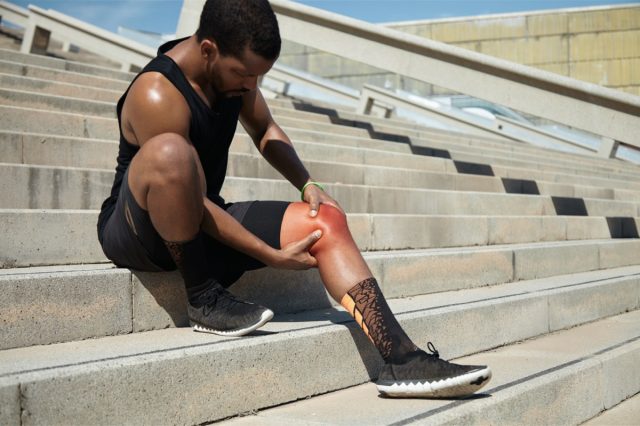
Stair training works when the reps stay controlled, and your knee feels supported through the whole range. Use the railing, start with the lowest step, and stop a set before your form gets sloppy. The goal is steady progress, not rushing into a higher step before your legs are ready.
- Use the railing every time: Support lets you train the knee without turning each rep into a balance test.
- Start on the bottom step: A lower height gives your quads and hips a better chance to control the movement.
- Slow down the lowering: Step-downs and toe taps build more knee control when you slow down.
- Watch your knee path: Keep the knee pointing in the same direction as your toes.
- Train both legs evenly: Give the weaker side the same number of reps, even if the range has to be smaller.
- Stop if pain changes your movement: Muscle effort is fine. Sharp pain, limping, or shifting away from one leg means you need to stop the set.
- Practice a few days per week: Two to four short sessions give your knees regular strength work without overloading them.
References
- Park, Soo Yeon et al. “Aging-related changes in knee flexor muscle strength and cross-sectional area.” Medicine vol. 101,42 (2022): e31104. doi:10.1097/MD.0000000000031104
- Solan, Matthew. “Strength Training Tied to Smaller Risk of Knee Osteoarthritis and Pain Later in Life.” Harvard Health Publishing, Harvard Medical School, 1 Feb. 2024, www.health.harvard.edu/diseases-and-conditions/strength-training-tied-to-smaller-risk-of-knee-osteoarthritis-and-pain-later-in-life. Reviewed by Howard E. LeWine.
The post 4 Stair Exercises That Restore Knee Strength Faster Than Squats After 60 appeared first on Eat This Not That.


