“Classic exercise” usually means a movement that has been around forever because it still works. Think squats, push-ups, lunges, planks, and a few other moves you probably learned in middle-school P.E. class. Hopefully this time nobody is standing nearby with a clipboard and a whistle.
These exercises stick around for a good reason. After 60, strength and balance depend on how well you can control your own body while you stand, lower yourself, push, step, and brace. Those skills carry into stairs, getting off the floor, yard work, travel, and just about anything else that keeps you active.
Gym machines can build plenty of strength, and I use them with clients when they fit the goal. Over years of coaching, though, I’ve found people also need regular practice moving without a machine guiding the path. Classic exercises make your legs stabilize, your core stay involved, and your upper body support its share of the work.
The six moves below cover the whole body with exercises most people already recognize. You’ll train basic strength while giving your balance and body control regular practice, all with movements you can keep using for years.
Bodyweight Squat
Few exercises tell me more about someone’s lower-body strength than a basic squat. You have to control yourself on the way down and produce enough force to stand back up, which is the same general demand you face every time you leave a chair. Squats also keep your ankles, knees, and hips working together while your balance shifts through the rep.
Muscles Trained: Quads, glutes, hamstrings, calves, core.
How to Do It
- Stand with your feet about shoulder-width apart.
- Let your toes point slightly outward if that feels natural.
- Bend your knees and sit your hips back.
- Lower until your thighs reach at least parallel, if comfortable.
- Press through your feet to stand.
- Reset and repeat.
Recommended Sets and Reps: Perform 2 to 3 sets of 8 to 12 reps. Rest for 45 to 60 seconds.
Best Variations: Chair squat, supported squat, goblet squat.
Form Tip: Keep your feet planted as you stand.
RELATED: 5 Daily Exercises That Restore Leg Strength Faster Than Gym Workouts After 60
Push-Up
Push-ups have probably survived every generation of workout programs because they ask a lot from a simple movement. Your chest and arms provide the pressing strength, while your trunk keeps your body supported from head to heel. After 60, that strength can help you push yourself up, support your body with your hands, and keep your upper body capable during daily tasks.
Muscles Trained: Chest, shoulders, triceps, abs.
How to Do It
- Place your hands slightly wider than shoulder-width apart.
- Set your body in a straight line from your head to your heels.
- Brace your midsection.
- Bend your elbows and lower your chest.
- Stop when your elbows reach about 90 degrees.
- Press through your hands to return to the start.
Recommended Sets and Reps: Perform 2 to 3 sets of 6 to 12 reps. Rest for 45 to 60 seconds.
Best Variations: Wall push-up, incline push-up, knee push-up.
Form Tip: Lower as one unit.
Reverse Lunge
Walking puts you on one leg over and over again, and lunges let you strengthen that position on purpose. Stepping backward makes the setup easier to control while your front leg does most of the work. I like reverse lunges for older clients because they build useful leg strength while also asking you to organize your balance with each rep.
Muscles Trained: Quads, glutes, hamstrings, calves, core.
How to Do It
- Stand tall with your feet under your hips.
- Step your right foot backward.
- Bend both knees and lower into a comfortable lunge.
- Keep your front foot flat.
- Press through your front foot to stand.
- Complete your reps, then switch sides.
Recommended Sets and Reps: Perform 2 to 3 sets of 6 to 10 reps per side. Rest for 45 to 60 seconds.
Best Variations: Supported reverse lunge, smaller-range reverse lunge, split squat.
Form Tip: Let your front leg bring you back up.
RELATED: 4 Couch Exercises That Flatten Belly Overhang Faster Than Gym Workouts After 60
Standing Calf Raise
The calf raise doesn’t look flashy, but it covers a strength area that becomes hard to ignore when it fades. Your calves help push you forward while walking and support ankle stability as your weight shifts. Rising onto your toes also gives you a small balance challenge without making the exercise complicated. Keep a chair or counter nearby if you want a little support.
Muscles Trained: Calves, ankles, feet.
How to Do It
- Stand tall with your feet about hip-width apart.
- Hold a sturdy surface lightly if needed.
- Press through the balls of your feet.
- Lift your heels off the floor.
- Reach a comfortable height.
- Lower your heels with control.
Recommended Sets and Reps: Perform 2 to 3 sets of 10 to 15 reps. Rest for 30 to 45 seconds.
Best Variations: Supported calf raise, single-leg calf raise, seated calf raise.
Form Tip: Rise straight up through the balls of your feet.
Forearm Plank
A strong midsection helps everything else feel more connected. The forearm plank teaches your abs to support your torso while your shoulders and hips stay in place, which helps anytime you lift, carry, or change direction. There’s no movement to memorize here. The challenge is holding the position long enough to make your core work.
Muscles Trained: Abs, shoulders, glutes, upper back.
How to Do It
- Place your forearms on the floor.
- Set your elbows beneath your shoulders.
- Extend your legs behind you.
- Lift your body into a straight line.
- Brace your abs and keep your spine neutral.
- Hold while breathing steadily.
Recommended Sets and Reps: Perform 2 to 3 holds of 15 to 30 seconds. Rest for 30 to 45 seconds.
Best Variations: Incline plank, knee plank, full plank.
Form Tip: Keep your spine neutral throughout the hold.
RELATED: If You Can Hold a Plank This Long After 60, Your Core Strength Is Top-Tier
Standing March
Marching looks almost too simple to count as training until you slow it down and make every step deliberate. Each knee lift puts you briefly on one leg, giving your hips and ankles a chance to control your balance. It also strengthens the hip flexors that help move your leg forward when you walk. For someone rebuilding confidence after 60, this is an easy exercise to practice often without needing much space.
Muscles Trained: Hip flexors, glutes, quads, calves, core.
How to Do It
- Stand tall with your feet under your hips.
- Hold a chair or counter lightly if needed.
- Lift your right knee to a comfortable height.
- Lower your right foot with control.
- Lift your left knee.
- Continue alternating sides.
Recommended Sets and Reps: Perform 2 to 3 sets of 8 to 12 marches per side. Rest for 30 to 45 seconds.
Best Variations: Supported march, slower march, goblet hold march.
Form Tip: Set each foot down under control.
RELATED: 5 Standing Exercises That Tone Back Fat Faster Than Rows After 60
How to Keep These Classics Working for You After 60
The value of classic exercises comes from keeping them in your week long enough to get stronger. Two or three sessions can cover plenty when you stay consistent, and you can shorten the routine on busy days without losing the habit.
- Choose a few weekly staples: Keep two or three of these exercises in each strength session so you practice them regularly.
- Use easier versions when needed: A wall push-up or supported lunge still builds strength and can help you stay consistent.
- Progress one variable at a time: Add reps, a longer hold, or a little resistance once your current version feels comfortable.
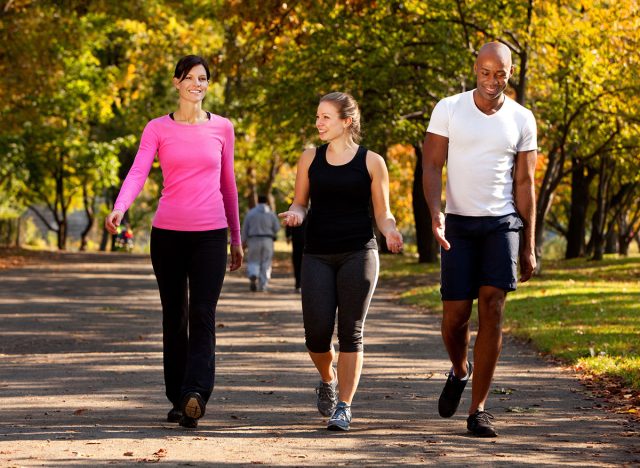
- Keep walking in the mix: Regular walks build leg strength and balance in a way that carries over.
- Give balance extra practice: Add a few controlled marches or calf raises near a counter on days you aren’t strength training.
- Revisit the basics: If a harder variation starts feeling sloppy, go back to the simpler version and rebuild from there.
- Measure what daily life tells you: Easier stairs, smoother chair stands, and more confidence on your feet are useful signs that the routine is working.
References
- Wang, Jixian et al. “Age-Related Dysfunction in Balance: A Comprehensive Review of Causes, Consequences, and Interventions.” Aging and Disease vol. 16,2 714-737. 24 Jan. 2024, doi:10.14336/AD.2024.0124-1
- Keller, Karsten, and Martin Engelhardt. “Strength and muscle mass loss with aging process. Age and strength loss.” Muscles, Ligaments and Tendons Journal, vol. 3,4 346-50. 24 Feb. 2014
The post 6 Classic Exercises That Protect Strength and Balance Better Than Gym Machines After 60 appeared first on Eat This Not That.


