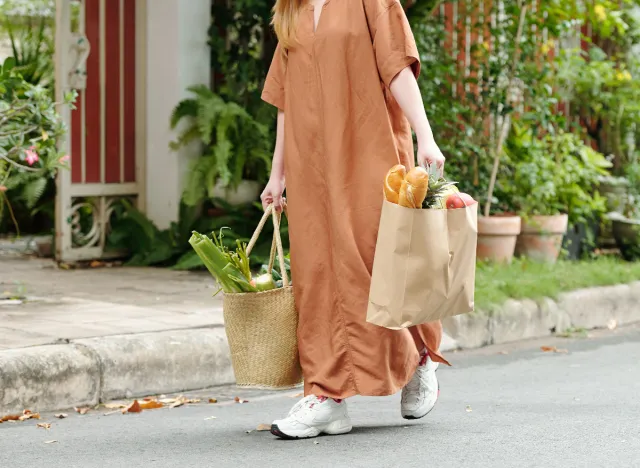
Carrying strength shows up in everyday life. A grocery bag in one hand, a suitcase by your side, a laundry basket against your chest. After 60, those everyday carries can feel heavier as grip strength, posture, and core control begin to fade.
Building that strength helps you stay more capable. Stronger hands make bags easier to hold. A stronger trunk helps you stay tall under load. Stronger hips and legs help you walk with control while carrying something awkward or uneven.
Dumbbells can help you build muscle, and they’re still useful. But carrying strength also needs practice with loaded walking, bracing, and resisting side-to-side pull. Kettlebells, bands, and bodyweight holds are easy to learn, and they train the exact skills you use when you pick something up and move with it.
Ahead, you’ll get five exercises that build carrying strength from the grip inward. The routine trains one-sided carries, two-handed carries, front-loaded posture, side-core strength, and anti-rotation control so daily tasks feel easier.
RELATED: The 6-Minute Bed Routine That Flattens Lower Belly Overnight Faster Than Crunches After 65
Kettlebell Suitcase Carry
Pick up one kettlebell, and your body has to solve a simple problem: stay tall while the weight pulls you to one side. That is exactly why suitcase carries are so useful for everyday carrying strength. They train your grip, obliques, hips, and posture at the same time. After 60, this exercise helps you handle one-sided loads like grocery bags or a travel bag without leaning or rushing.
Muscles Trained: Grip, obliques, shoulders, glutes, core.
How to Do It
- Stand next to a kettlebell.
- Hinge at your hips and grip the handle with one hand.
- Stand tall with the kettlebell by your side.
- Keep your shoulders level.
- Walk forward with controlled steps.
- Set the kettlebell down safely, then switch sides.
Recommended Sets and Reps: Perform 2 to 3 carries of 20 to 40 seconds per side. Rest for 30 to 45 seconds.
Best Variations: Lighter suitcase carry, shorter-distance carry, dumbbell suitcase carry.
Form Tip: Keep your shoulders level.
Kettlebell Farmer Carry
Farmer carries teach your whole body to stay strong under load. With a kettlebell in each hand, your grip has to hold, your upper back has to support your posture, and your legs have to keep the walk steady. This is one of the most practical strength exercises for anyone who wants daily tasks to feel easier. Use a weight that challenges your hands without forcing you to shrug or lean forward.
Muscles Trained: Grip, forearms, shoulders, upper back, glutes, core.
How to Do It
- Place two kettlebells on the floor outside your feet.
- Hinge at your hips and grip one handle in each hand.
- Stand tall with your arms by your sides.
- Keep your chest lifted.
- Walk forward with steady steps.
- Set the kettlebells down with control.
Recommended Sets and Reps: Perform 2 to 3 carries of 20 to 40 seconds. Rest for 45 to 60 seconds.
Best Variations: Lighter farmer carry, shorter carry, one-kettlebell farmer carry.
Form Tip: Walk tall without shrugging.
RELATED: If You Can Hold a Bridge This Long After 55, Your Core Strength Is Stronger Than 90% of Peers
Goblet Hold Marching
Some carrying tasks happen close to your body, and the goblet hold trains that position well. Holding a kettlebell at your chest engages your core and upper back, while each knee lift challenges balance. The march adds a walking-strength piece without needing much space. It’s a strong option after 60 because it teaches you to stay upright while the load sits in front of you.
Muscles Trained: Core, upper back, hip flexors, glutes, quads.
How to Do It
- Hold a kettlebell at chest height with both hands.
- Stand tall with your feet under your hips.
- Brace your abs lightly.
- Lift your right knee to a comfortable height.
- Lower your right foot with control.
- Switch sides and continue alternating.
Recommended Sets and Reps: Perform 2 to 3 sets of 8 to 12 marches per side. Rest for 30 to 45 seconds.
Best Variations: Bodyweight marching, lighter goblet hold, supported goblet marching.
Form Tip: Keep the kettlebell close to your chest.
Side Plank
Carrying strength often comes down to how well you resist bending sideways. Side planks build strength in the obliques and hips, helping your torso stay steady when you carry weight in one hand. This exercise also gives your shoulders and core useful support work without needing extra equipment. Start from your knees if the full version feels too demanding.
Muscles Trained: Obliques, abs, shoulders, glutes, hips.
How to Do It
- Lie on your side with your elbow under your shoulder.
- Stack your legs or bend your knees.
- Press your forearm into the floor.
- Lift your hips.
- Hold the position while breathing steadily.
- Lower with control, then switch sides.
Recommended Sets and Reps: Perform 2 to 3 holds of 15 to 30 seconds per side. Rest for 30 to 45 seconds.
Best Variations: Knee side plank, shorter side plank hold, side plank from an elevated surface.
Form Tip: Keep your hips lifted.
RELATED: The 8-Minute Chair Routine That Restores Full-Body Strength After 65
Pallof Press
A loaded bag rarely pulls on your body perfectly evenly. The Pallof press helps you train that challenge with a band. As you press your hands forward, the band tries to rotate your torso, and your core has to hold steady. This gives you the anti-rotation strength you need for carrying, lifting, and moving through the day with better control.
Muscles Trained: Abs, obliques, shoulders, glutes.
How to Do It
- Anchor a resistance band at chest height.
- Stand sideways to the anchor point.
- Hold the band with both hands at your chest.
- Step away until the band has light tension.
- Press your hands straight forward.
- Pause, then bring your hands back to your chest.
Recommended Sets and Reps: Perform 2 to 3 sets of 8 to 12 reps per side. Rest for 30 to 45 seconds.
Best Variations: Pallof press hold, lighter band Pallof press, half-kneeling Pallof press.
Form Tip: Keep your chest facing forward.
RELATED: 5 Standing Exercises That Rebuild Shoulder Strength Faster Than Gym Machines After 60
How to Build Carrying Strength After 60
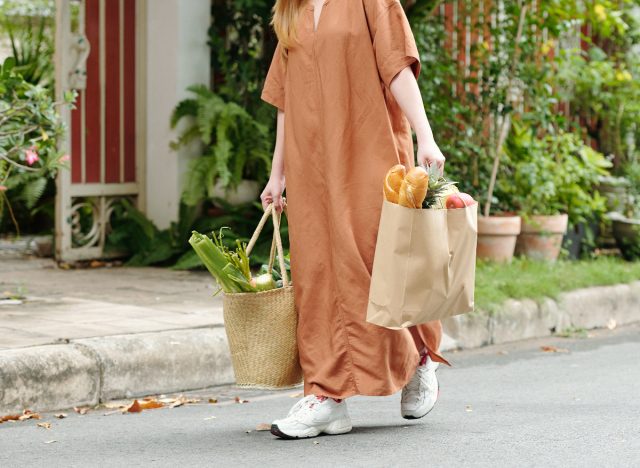
Carrying strength improves when you train grip, posture, core control, and walking under load. Use these exercises three to five days per week with weights you can control. Start lighter than you think, then build time or distance once your posture stays strong from the first step to the last.
- Start with one-sided carries: Suitcase carries show whether one side leans or fatigues faster.
- Use loads you can hold cleanly: Your grip should work hard without making your shoulders creep up.
- Keep carries short at first: Twenty strong seconds beats a longer carry with sloppy posture.
- Train the trunk between carry days: Side planks and Pallof presses build the control that helps you carry better.
- Hold weight close on marches: A tight goblet position helps your upper back and core stay involved.
- Walk with steady steps: Fast, uneven steps usually mean the weight is too heavy.
- Progress by time before weight: Add 5 to 10 seconds to your carries before choosing a heavier kettlebell.
References
- Ellestad, Samuel H et al. “The Quantification of Muscle Activation During the Loaded Carry Movement Pattern.” International journal of exercise science vol. 17,1 480-490. 1 Apr. 2024, doi:10.70252/NWUE9985
- Žlibinaitė, Laura et al. “Effect of Eight-Week Strength Training on Body Composition, Muscle Strength and Perceived Stress in Community-Dwelling Older Women.” Geriatrics (Basel, Switzerland) vol. 10,6 136. 23 Oct. 2025, doi:10.3390/geriatrics10060136
The post 5 Daily Exercises That Build Carrying Strength Faster Than Dumbbells After 60 appeared first on Eat This Not That.


