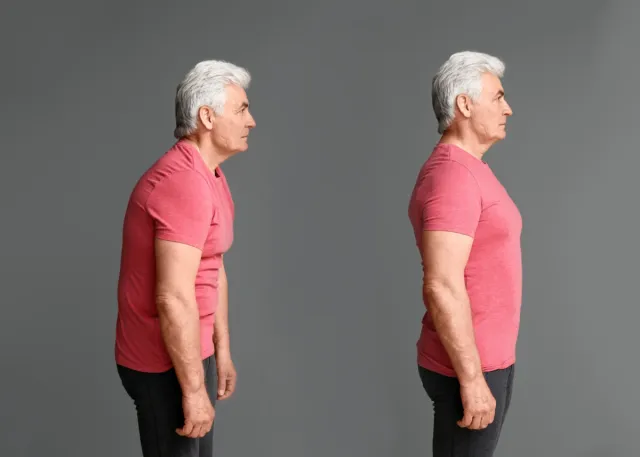
After four decades as a personal trainer and 25 years as co-founder of TRAINFITNESS, the UK’s leading provider of personal training courses, I’ve noticed that posture decline has become one of the most common complaints among my clients over 50.
A standing desk alone won’t reverse that slide, and the daily habits that pull your shoulders forward and shorten your chest need direct attention. Posture is one of the most fixable problems I know. You can start improving yours today with three simple daily exercises that target the muscles most people have forgotten how to use.
The Real Posture Problems After 50
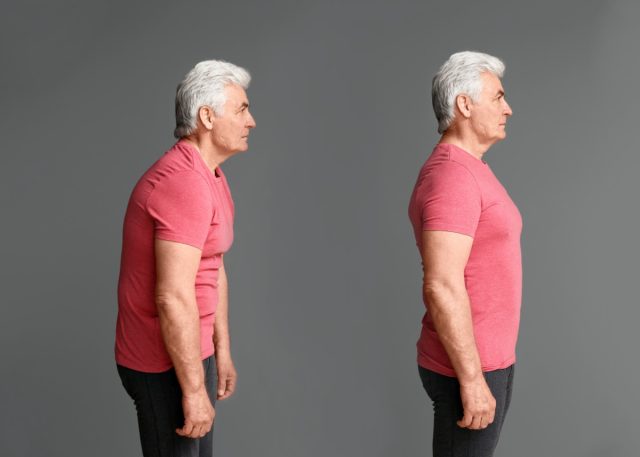
The most common pattern I see is the forward head and rounded shoulders. Clients come in sitting with their ears ahead of their shoulders and their shoulders ahead of their hips. This usually travels with a weak mid-back, so the spine loses the support it needs to stay upright. The chest muscles on the front have shortened over years of desk work and driving. They pull the whole shoulder girdle forward, which then drags the upper back into a C shape.
A second problem is a weak lower back and trunk. The deep core muscles simply can’t hold the spine in a neutral position against gravity. When I look at a client from the side, I can often see the lower back has lost its natural curve. They’re living in a mild slump all day, whether they’re walking or sitting in a chair. These are all muscle and flexibility issues, and those respond to the right training.
RELATED: 5 Daily Exercises That Build Carrying Strength Faster Than Dumbbells After 60
Why This Beats a Standing Desk
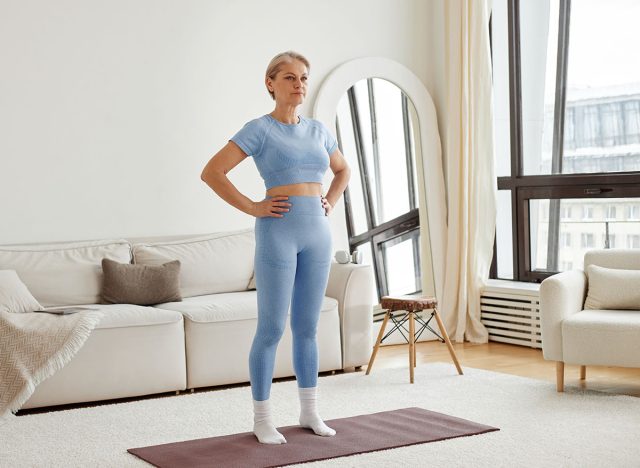
I want to be fair about standing desks, because they do break up sitting time, and that alone is worth doing. But a standing desk changes your position without rebuilding the parts that hold you there. Posture is a strength and flexibility matter, not just a position. If the muscles along your back are weak and the front of your chest is tight, you’ll slump whether you’re sitting or standing. A slumped stand is still a slump.
The exercises here train the muscles that actually lift you up. They strengthen the back line against gravity and lengthen the chest so the shoulders can sit back. That’s the difference. One approach gives you a new piece of furniture. The other gives you a body that can hold a good position on its own, at a desk or anywhere else.
Prone Cobra
Posture collapses when the muscles along the back can’t hold you up against gravity. This exercise trains the whole back line at once, including the spinal muscles, the mid-back, and the muscles between the shoulder blades. It’s a gentle but complete way to wake those muscles up.
How to Do It:
- Lie face down on a mat with your arms by your sides and your palms facing down.
- Rest your forehead on the floor.
- Gently lift your chest and hands a little off the floor.
- Turn your palms out and squeeze your shoulder blades together as you lift.
- Keep your eyes looking down towards the floor.
- Hold for 3 to 5 seconds, then lower with control.
- Do 8 to 10 repetitions.
Avoid These Mistakes:
- Don’t lead with your chin and crank your head back. It strains the neck. Keep your eyes on the floor and focus on lengthening through the spine rather than crunching the lower back.
Sets and Reps: 8 to 10 repetitions.
RELATED: The 6-Minute Bed Routine That Flattens Lower Belly Overnight Faster Than Crunches After 65
Band Pull-Apart
Rounded shoulders are the most visible part of poor posture after 50. This move strengthens the muscles across the mid-back and the backs of the shoulders, the ones that pull your shoulders back to where they belong. If you don’t have a band, a rolled towel held under tension works fine.
How to Do It:
- Hold a light resistance band with both hands at chest height, arms straight out in front of you.
- Squeeze your shoulder blades together.
- Pull the band apart, opening your arms out to the sides.
- Keep your arms long and your shoulders down.
- Return to the start position under control.
- Do 12 to 15 repetitions.
Avoid These Mistakes:
- Don’t shrug your shoulders up towards your ears, and don’t bend your elbows to cheat the movement. Keep your shoulders down and your arms long, and let the squeeze come from the mid-back muscles.
Sets and Reps: 12 to 15 repetitions.
Doorway Chest Stretch
Years of slumping shorten the muscles across the front of the chest, and those pull the shoulders forward. Opening the chest allows the shoulders to sit back, which means the strengthening work in the other two exercises can actually hold.
How to Do It:
- Stand in a doorway with your forearms resting on the frame.
- Bend your elbows at about shoulder height.
- Step one foot through the doorway.
- Lean gently forward until you feel a comfortable stretch across the chest and the front of the shoulders.
- Hold for 20 to 30 seconds.
- Breathe normally throughout.
Avoid These Mistakes:
- Don’t arch your lower back or push your ribs forward to feel more stretch. Stay tall and let the stretch sit across the chest. Ease in gently rather than forcing it.
Sets and Reps: Hold for 20 to 30 seconds.
RELATED: If You Can Hold a Bridge This Long After 55, Your Core Strength Is Stronger Than 90% of Peers
How Often to Do This

These three moves are gentle enough for daily use and together take under 10 minutes. The best approach is to attach them to a time you already have, so they become automatic. First thing in the morning works for many clients because it gets the posture muscles switched on before the day pulls you forward. Others prefer doing them at the end of the day to undo the hours of slumping.
I also advise pairing the exercises with movement breaks through the day. Getting up every 45 to 60 minutes for a short walk or a simple stretch is part of the fix. Holding any single position for hours, standing included, is what causes the trouble. The exercises strengthen the muscles, and the breaks stop the stiffness from building up.
RELATED: The 8-Minute Chair Routine That Restores Full-Body Strength After 65
What to Expect
In the first week or two, most people notice a feeling of sitting and standing taller. That change comes mostly from awareness and from releasing tension in the chest. It’s a good sign, but it’s not yet a structural change. By four to six weeks, the back and shoulder muscles are genuinely stronger, and the upright position holds with less conscious effort. You stop reminding yourself to sit up, because it begins to be the default.
Beyond that, keep going. These postural habits took years to set in, so real change is measured in months of consistency, not days. Stick with the routine daily, and by the third month the new position starts to feel unnatural to lose. That’s the goal, when good posture is no longer something you think about but simply how you stand and sit.
The post 3 Daily Exercises That Rebuild Posture Faster Than Standing Desks After 50 appeared first on Eat This Not That.


