Bat wings usually get talked about like they’re only an arm problem, but the best plan trains more than the back of the upper arm. The triceps need direct work, and the shoulders and upper back help the whole area look stronger and firmer. Thirty days gives you enough time to build better tone, improve control, and start seeing more shape through consistent training.
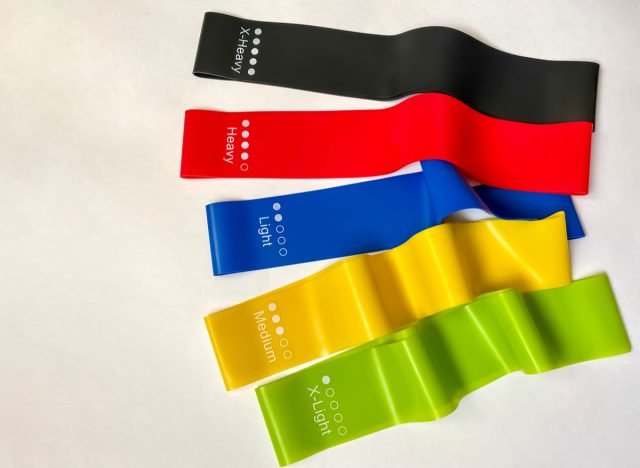
I like standing arm exercises for clients over 50 because the setup feels simple and the reps feel easy to adjust. A band, wall, or light pair of weights can provide plenty of useful upper-body work. The goal is clean tension through the arms, strong posture, and a pace you can repeat several days per week.
This article gives you a practical standing routine for the muscles that shape the upper arms. You’ll learn how to train the triceps directly, use band work to strengthen the back of the shoulders, and add pressing work that helps your arms feel stronger during daily movement.
Band Lat Sweeps
Start with the upper back before you chase the arms. Band lat sweeps teach you to pull the arms down while keeping the shoulders set, which helps the back and triceps share the work. You should feel the sides of your back tighten as your hands sweep toward your hips. Keep the elbows mostly straight and move slowly enough to control the band on the way back up.
Muscles Trained: Lats, triceps, rear delts, shoulders, core.
How to Do It
- Anchor a resistance band slightly above chest height.
- Stand facing the anchor point and hold one end of the band in each hand.
- Step back until the band has light tension.
- Start with your arms reaching forward.
- Sweep your hands down toward your hips.
- Return your arms forward with control.
Recommended Sets and Reps: Perform 2 to 3 sets of 10 to 15 reps.
Best Variations: Lighter band lat sweep, single-arm lat sweep, slower lat sweep.
Form Tip: Keep your arms long as your hands move toward your hips.
RELATED: 5 Daily Exercises That Trim Waist Overhang Faster Than Gym Workouts After 50
Band Pull-Aparts
Pull-aparts help the shoulders sit in a stronger position, which can make arm training feel better right away. The rear delts and upper back do most of the work as you pull the band across your chest. Use light tension here. If the band is too heavy, the shoulders start creeping up and the arms lose the clean path you want.
Muscles Trained: Rear delts, upper back, shoulders, rotator cuff.
How to Do It
- Stand tall and hold a resistance band with both hands.
- Reach your arms straight in front of your chest.
- Set your hands slightly wider than shoulder-width.
- Pull the band apart until your hands move toward your sides.
- Pause briefly when your upper back tightens.
- Return to the starting position with control.
Recommended Sets and Reps: Perform 2 to 3 sets of 12 to 15 reps.
Best Variations: Lighter band pull-apart, palms-up pull-apart, diagonal pull-apart.
Form Tip: Keep your shoulders relaxed as your hands move apart.
Standing Band Triceps Pressdown
This is the most direct move for the back of the upper arm. Anchor the band high, pin your elbows near your ribs, and press your hands down until the arms straighten. The triceps should feel like they’re finishing each rep. Pause for a second at the bottom so the squeeze feels intentional.
Muscles Trained: Triceps, shoulders, forearms, core.
How to Do It
- Anchor a resistance band above shoulder height.
- Stand facing the anchor point and hold the band with both hands.
- Keep your elbows close to your ribs.
- Start with your elbows bent.
- Press your hands down until your arms straighten.
- Bend your elbows and return with control.
Recommended Sets and Reps: Perform 2 to 3 sets of 10 to 15 reps.
Best Variations: Lighter band pressdown, single-arm pressdown, paused pressdown.
Form Tip: Keep your upper arms still as your elbows bend and straighten.
RELATED: If You Can Do This Many Pushups After 60, Your Arm Strength Is Stronger Than 90% of Peers
Standing Overhead Triceps Extension
Overhead extensions hit the triceps from a different angle than pressdowns. Reach the band or light weight overhead, bend at the elbows, then straighten your arms until you feel the backs of the upper arms tighten. This one works well when you move with patience. Keep your ribs stacked, and let your elbows do the bending instead of turning it into a full-body lean.
Muscles Trained: Triceps, shoulders, upper back, core.
How to Do It
- Stand tall and hold one end of a resistance band or one light dumbbell with both hands.
- Bring your hands overhead.
- Keep your elbows pointing forward.
- Bend your elbows and lower your hands behind your head.
- Straighten your arms overhead.
- Repeat with steady control.
Recommended Sets and Reps: Perform 2 to 3 sets of 8 to 12 reps.
Best Variations: Lighter overhead extension, smaller-range extension, single-arm overhead extension.
Form Tip: Keep your arms by your ears as you extend.
Standing Wall Push-Up
Wall push-ups give the arms one more chance to press with control. The triceps help finish the rep as you push away from the wall, while the chest and shoulders support the movement. Step your feet back far enough to feel challenged, then press through your hands and finish tall. This is a great finisher because you can adjust the angle right away as your arms fatigue.
Muscles Trained: Triceps, chest, shoulders, core.
How to Do It
- Stand facing a wall.
- Place your hands on the wall at about chest height.
- Step your feet back slightly.
- Keep your body in a long line.
- Bend your elbows and lower your chest toward the wall.
- Press through your hands to return to the top.
Recommended Sets and Reps: Perform 2 to 3 sets of 8 to 15 reps.
Best Variations: Higher-hand wall push-up, slower wall push-up, close-grip wall push-up.
Form Tip: Press through the wall to push your body back up.
RELATED: The 5-Minute Balance Routine That Cuts Fall Risk After 70
How to Keep Firming Your Arms After 50
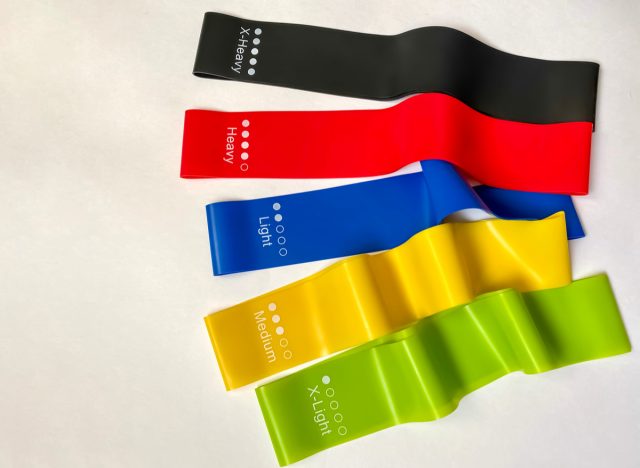
Thirty days can give your arms a strong jump-start if you stay consistent. Use these exercises three to five days per week, and keep the resistance light enough to control every rep. Pair the training with regular walking, protein-forward meals, and steady hydration so your body has the support it needs to build muscle and reveal more shape.
- Start with lighter bands: Clean reps help the arms and shoulders feel the right muscles working.
- Pause during triceps work: A brief squeeze at the bottom of pressdowns or top of extensions makes light resistance more effective.
- Keep posture tall: Strong upper-back position helps every arm exercise feel smoother.
- Use the wall angle wisely: Step closer for easier wall push-ups and farther back as your arms get stronger.
- Train the upper back, too: Pull-aparts and lat sweeps help the arms look stronger by improving shoulder position.
- Build gradually: Add reps, band tension, or another set once the current version feels strong.
References
- Briand, Marguerite et al. “Body composition and aging: cross-sectional results from the INSPIRE study in people 20 to 93 years old.” GeroScience vol. 47,1 (2025): 863-875. doi:10.1007/s11357-024-01245-6
- Halma, Matthew et al. “Reversing Decline in Aging Muscles: Expected Trends, Impacts and Remedies.” Journal of functional morphology and kinesiology vol. 10,1 29. 11 Jan. 2025, doi:10.3390/jfmk10010029
The post 5 Standing Exercises That Banish Bat Wings in 30 Days After 50 appeared first on Eat This Not That.


